


Spotted Lanternfly Egg Masses: How to Spot, Scrape and Destroy Them Before Winter in NJ

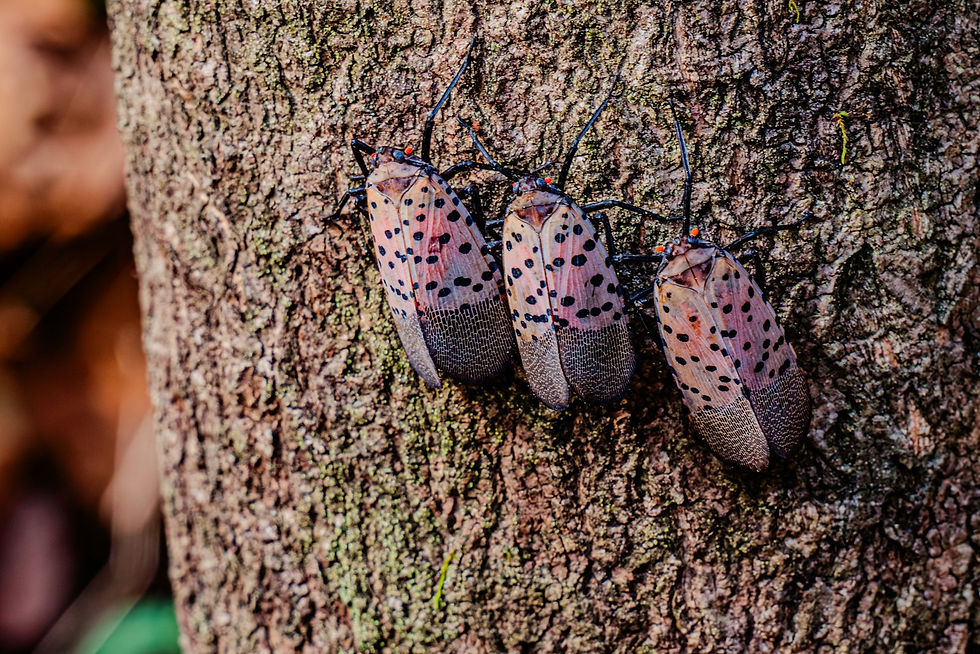
By October, most of the adult spotted lanternflies that covered trees, decks and patios all summer are winding down.
But before they die off for the season, the females leave something behind: egg masses.
Each one can hold dozens of eggs that will survive the winter and hatch into a new generation next spring.
That is why fall and winter are such an important window for New Jersey homeowners. An egg mass you scrape off a tree in October is a group of lanternflies you will not be dealing with in June.
Here is how to recognize spotted lanternfly eggs, where to look for them around your home, and how to destroy them safely.
What Is the Spotted Lanternfly?
The spotted lanternfly is an invasive planthopper native to Asia. It was first found in the United States in Pennsylvania in 2014 and has since spread across New Jersey and much of the Northeast.
Adults are about an inch long, with gray front wings marked with black spots and bright red hind wings that flash when they fly.
They feed on plant sap from more than 70 species, with a strong preference for tree of heaven, grapevines, maples, black walnut and other trees. Heavy feeding can stress plants, and the sticky honeydew they excrete encourages black sooty mold on decks, cars, outdoor furniture and anything else underneath.
Spotted lanternflies do not bite or sting people or pets. The concern is plant damage, the mess they leave behind, and how easily they spread.
Why Egg Masses Matter in the Fall
Spotted lanternflies have one generation per year.
Adults typically begin laying eggs in September, and egg-laying can continue until a hard freeze kills the adults, often into November or even December.
The eggs then sit through the winter and hatch in late April through June.
That means the eggs you find now are the start of next year's population. Destroying egg masses is one of the simplest things a homeowner can do to reduce lanternflies on their own property.
What Do Spotted Lanternfly Eggs Look Like?
This is where many people get confused, because egg masses are easy to miss.
A spotted lanternfly egg mass:
Is about 1 to 1.5 inches long
Is laid in rows and usually contains 30 to 50 eggs
Is covered in a gray, mud-like coating when fresh
Looks like a smear of dried mud or putty
Turns tan or brown and starts to crack as it ages
After hatching, shows rows of small oval holes
Older masses with the coating worn away look like rows of tiny brown seeds lined up side by side.
Where to Look for Lanternfly Egg Masses
Spotted lanternflies are not picky about where they lay eggs.
Check:
Tree trunks and branches, especially tree of heaven, maples and black walnut
The underside of large limbs
Stone and brick walls
Fences and posts
Outdoor furniture and grills
Firewood stacks
Sheds and the sides of garages
Trailers, boats and RVs
Vehicles parked under infested trees
Landscaping stones and decorative rocks
Look low and high. Egg masses are often within easy reach on trunks, but they can also be laid high in trees where you cannot get to them.
How to Scrape and Destroy Spotted Lanternfly Eggs
Destroying an egg mass is simple. The key is making sure the eggs are actually killed and not just knocked onto the ground.
What You Need
A plastic card, putty knife or similar flat tool
A plastic bag or a container with a lid
Rubbing alcohol or hand sanitizer
Step-by-Step
Hold the bag or container directly under the egg mass.
Scrape firmly from top to bottom so the eggs fall into the bag or container.
If using a container, fill it with rubbing alcohol or hand sanitizer so the eggs are covered.
If using a bag, add alcohol or sanitizer, seal it, and squish the contents.
Seal it and throw it away with your regular trash.
You can also smash egg masses in place, but be thorough. Each egg needs to be crushed. If you can hear or feel a pop, you are breaking eggs.
Do not just scrape egg masses onto the ground. Eggs that fall into mulch or soil may still survive and hatch.
What About Egg Masses on Trees You Cannot Reach?
Some egg masses will be laid high in tree canopies, well out of reach.
Do not climb ladders into trees to chase them.
Focus on what you can safely reach, and accept that you will not get every egg mass on your property. The goal is reducing the population, not eliminating every single egg.
Check Your Car and Firewood Before Traveling
One of the biggest reasons spotted lanternflies spread so quickly is that they hitchhike.
Egg masses on vehicles, trailers, firewood and outdoor equipment can be moved to new areas without anyone noticing.
The New Jersey Department of Agriculture has quarantine rules for spotted lanternfly, and businesses moving goods out of quarantine areas may need permits. Homeowners are encouraged to check vehicles, trailers and outdoor items before traveling, and to avoid moving firewood.
Because quarantine areas and reporting guidance can change, check the NJ Department of Agriculture's current spotted lanternfly page for the latest rules in your county.
Should You Report Spotted Lanternfly Eggs?
Reporting guidance depends on where you live.
In areas where spotted lanternfly is already well established, state agencies generally focus on asking residents to destroy what they find rather than report every sighting. In areas where it is newer, reports help track the spread.
The NJ Department of Agriculture website has current instructions on whether and how to report in your area.
Do Spotted Lanternflies Come Inside the House?
Occasionally, adults find their way indoors, especially if they are clinging to clothing, bags or firewood.
They do not overwinter inside homes the way stink bugs or boxelder bugs do. Adults die off with freezing weather, and the next generation survives only as eggs outdoors.
If you are finding other insects gathering on your siding this fall, such as stink bugs or boxelder bugs, those are a different problem with a different solution. Our stink bug control service covers fall overwintering insects.
Protecting Your Yard Next Spring
Destroying egg masses is the best fall step. Next season, homeowners can also:
Watch for black-and-white nymphs in May and June
Look for red nymphs with white spots in July
Use circle traps on tree trunks rather than sticky bands, which can trap birds and other wildlife
Consider removing tree of heaven from your property, ideally with professional help, because it is a favored host
If lanternflies are damaging valuable trees or landscaping, an arborist or lawn and tree care professional can help evaluate the best approach. You can learn more about our lawn service and our broader residential pest control programs for North Jersey homes.
Frequently Asked Questions About Spotted Lanternfly Eggs
When do spotted lanternflies lay eggs?
Egg-laying usually begins in September and continues until adults are killed by a hard freeze, often into November or December.
When do spotted lanternfly eggs hatch?
Eggs typically hatch from late April through June.
What does a spotted lanternfly egg mass look like?
A fresh egg mass looks like a 1 to 1.5-inch smear of gray mud or putty. Older masses look like rows of small brown seeds.
How do I kill spotted lanternfly eggs?
Scrape the egg mass into a bag or container with rubbing alcohol or hand sanitizer, seal it and throw it away. You can also crush the eggs thoroughly in place.
Can I just scrape the eggs onto the ground?
No. Eggs scraped onto the ground may survive and hatch. Make sure they are crushed or placed in alcohol or sanitizer.
Do spotted lanternflies bite?
No. Spotted lanternflies do not bite or sting people or pets.
Take Five Minutes This Weekend
Walking your property and scraping a few egg masses may not seem like much.
But every mass holds dozens of future lanternflies, and October through early spring is the only window to stop them before they hatch.
At Accurate Pest Management, we help North Jersey homeowners stay ahead of seasonal pests year-round. If fall invaders or other pests are giving you trouble, contact us or call 973-398-8798.
