


15 Warning Signs of a Rodent Infestation (Before the Damage Gets Worse)
- Andreyan Solanoy
- Jul 31
- 16 min read

Have you ever heard scratching behind your walls late at night or discovered tiny droppings in your pantry and wondered if you might have unwanted visitors?
You're not alone.
Rodents are among the most common household pests, and they often go unnoticed until they've already caused damage. By the time you actually see a mouse or rat running across the floor, there's a good chance it has already established a nest somewhere inside your home.
That's what makes early detection so important.
At Accurate Pest Control, we've inspected countless homes where homeowners initially dismissed small warning signs—only to discover a much larger infestation hidden behind walls, inside attics, or beneath crawl spaces. Acting quickly can help prevent costly repairs, reduce health risks, and stop a small rodent problem from turning into a serious infestation.
In this guide, we'll walk you through the most common signs of a rodent infestation, explain why rodents invade homes, highlight the damage they can cause, and share practical steps you can take to protect your property.
Let's start with why these pests are so difficult to detect in the first place.
Why Rodents Are So Good at Staying Hidden

One of the biggest challenges with rodent infestations is that rodents rarely want to be seen.
Mice and rats naturally avoid people. They're most active after dark, when the house is quiet and there's less activity. During the day, they typically stay hidden inside places most homeowners rarely inspect.
Common hiding spots include:
Inside wall voids
Attics
Crawl spaces
Basements
Behind kitchen appliances
Utility rooms
Ceiling cavities
Garages
Storage boxes
Insulation
Because of these hiding habits, homeowners usually notice indirect signs long before they ever see an actual rodent.
For example, you may hear scratching in the ceiling at night, notice small droppings under the kitchen sink, or find food packaging with tiny bite marks. These clues often appear weeks before a rodent is ever spotted.
Rodents are also surprisingly flexible. A mouse can squeeze through an opening about the width of a pencil, while a rat only needs a gap roughly the size of a quarter. Even tiny cracks around utility pipes, vents, or foundations can become entry points.
Understanding these behaviors makes it much easier to recognize the early warning signs.
15 Warning Signs of a Rodent Infestation

Not every sign is obvious. Some are subtle, while others point to a more established infestation.
If you notice several of these warning signs at the same time, it's a good indication that rodents may already be living inside your home.
1. Rodent Droppings
Rodent droppings are often the first visible clue that mice or rats are nearby.
Fresh droppings are usually dark, moist, and soft. As they age, they become dry, hard, and lighter in color.
You'll commonly find them:
Along baseboards
Inside kitchen cabinets
Under sinks
Behind appliances
Near pet food
Inside pantries
In attics
Around stored boxes
The size of the droppings can also provide clues about which type of rodent you're dealing with.
Mouse droppings are small and shaped like grains of rice with pointed ends. Rat droppings are larger and thicker, often measuring about half an inch long.
Finding only a few droppings doesn't necessarily mean the problem is minor. Rodents tend to travel the same routes repeatedly, so even a small number of droppings can indicate regular activity.
2. Scratching or Scurrying Sounds in Walls or Ceilings
Have you ever heard scratching noises after everyone has gone to bed?
That's one of the classic signs of rodent activity.
Since rodents are nocturnal, they're most active during the evening and early morning hours. While you're sleeping, they may be:
Searching for food
Building nests
Chewing materials
Traveling between nesting sites
Caring for their young
The sounds often come from:
Inside walls
Above ceilings
Under floors
Inside attics
Around HVAC ducts
Mice usually produce light scratching or quick scurrying sounds.
Rats, being much larger, often create heavier thumping or running noises that are easier to hear.
If the sounds become more frequent each night, it's a sign the infestation may be growing.
3. Gnaw Marks on Wood, Plastic, or Wires
Rodents never stop chewing.
Their front teeth grow continuously throughout their lives, so they constantly gnaw on different materials to keep them worn down.
Unfortunately, that means almost nothing inside your home is off-limits.
You might notice bite marks on:
Wooden trim
Furniture
Doors
Cabinets
Plastic containers
Cardboard boxes
PVC pipes
Drywall
Stored belongings
One of the most dangerous targets is electrical wiring.
Chewed wiring increases the risk of electrical shorts and, in severe cases, house fires.
In many homes we've inspected, damaged wiring wasn't discovered until an electrician investigated a power issue or during a pest inspection.
If you notice fresh gnaw marks combined with droppings or scratching noises, don't ignore the warning signs.
4. Grease Marks Along Walls
Unlike people, rodents don't wander randomly through a home.
They typically travel the same paths every night.
As rats move along walls, their oily fur leaves behind dark smudge marks known as grease marks or rub marks.
These marks often appear:
Along baseboards
Around corners
Near entry holes
Behind appliances
Along basement walls
Over time, these marks become darker as more rodents repeatedly use the same travel routes.
Finding grease marks can help professionals identify active rodent highways and determine where exclusion work should begin.
5. Strange Musky Odors
Sometimes your nose notices a rodent infestation before your eyes do.
A persistent musty or ammonia-like smell often develops as urine and droppings accumulate inside hidden spaces.
The odor may become stronger:
Inside cabinets
Near wall cavities
In attics
Under sinks
Around insulation
Inside crawl spaces
If a rodent dies inside a wall, the smell typically becomes much stronger over several days before gradually fading.
Many homeowners mistake these odors for mold or plumbing issues, delaying the discovery of the real problem.
If an unusual smell appears alongside scratching sounds or droppings, it's worth scheduling a professional inspection.
6. Nests Made from Shredded Materials
Rodents don't simply hide inside homes—they build comfortable places to raise their young.
A typical rodent nest may contain shredded:
Paper
Cardboard
Newspaper
Fabric
Insulation
Dryer lint
Cotton
Plant material
These nests are usually hidden inside wall voids, attics, crawl spaces, storage boxes, or behind large appliances where they're protected from disturbance.
Finding a nest almost always means rodents have been inside the home for some time.
It's also a sign that breeding may already be taking place.
Female mice can produce multiple litters every year under favorable conditions.
7. Food Packages with Bite Marks
Rodents are opportunistic feeders.
Once they find a reliable food source, they'll continue returning night after night.
One of the clearest signs is damaged food packaging.
Look for:
Small holes in cereal boxes
Torn snack bags
Chewed rice or pasta packages
Damaged pet food bags
Bird seed containers with bite marks
Open garbage bags
You may also notice scattered food crumbs or shredded packaging nearby.
Even if the damage seems minor, any food contaminated by rodents should be discarded immediately to reduce the risk of disease transmission.
8. Your Pets Suddenly Start Acting Strange
Sometimes, your dog or cat notices a rodent problem before you do.
Pets have much sharper hearing and a stronger sense of smell than humans. They can often detect movement behind walls, inside ceilings, or beneath floors long before any visible signs appear.
If your pet suddenly becomes fixated on one area of the house, don't ignore it.
Common behaviors include:
Barking or growling at walls
Pawing under kitchen cabinets
Staring at the ceiling for long periods
Sniffing vents or appliances repeatedly
Chasing something you can't see
Refusing to leave a specific room
While these behaviors don't automatically mean you have rodents, they can be another clue—especially when paired with scratching noises or droppings.
At Accurate Pest Control, we've visited homes where the homeowner's first clue wasn't a mouse—it was their dog repeatedly barking at the laundry room wall every night.
Think of your pets as an early warning system. They often detect problems before we can.
9. Footprints or Tail Marks in Dusty Areas
Rodents are creatures of habit.
They tend to use the same travel routes every night, which means they often leave behind tracks.
If you have dusty areas that aren't cleaned regularly, such as an attic, basement, crawl space, or garage, look closely for:
Tiny footprints
Tail drag marks
Smudged pathways through dust
Tracks around stored boxes
One simple trick is to sprinkle a light layer of flour or unscented baby powder in an area where you suspect rodent activity.
If fresh footprints appear the next morning, you've likely confirmed that something is moving through the space overnight.
While this isn't a permanent solution, it can help identify active travel routes before a professional inspection.
10. Urine Stains You Can't Easily See
Unlike droppings, rodent urine isn't always visible.
Mice and rats urinate frequently as they travel, marking familiar routes and helping other rodents locate food and nesting sites.
Over time, urine can soak into:
Wood
Drywall
Insulation
Carpeting
Cardboard boxes
Stored belongings
Professionals often use UV flashlights during inspections because dried rodent urine fluoresces under ultraviolet light.
Hidden urine contamination can also produce unpleasant odors and contribute to indoor air quality issues.
11. Seeing a Live or Dead Rodent
Seeing one mouse doesn't necessarily mean you only have one mouse.
In fact, by the time rodents become comfortable enough to appear during daylight hours, there's often a larger population hiding nearby.
Rodents reproduce quickly and establish nests in protected areas before homeowners ever notice them.
Whether you find:
A live mouse
A dead rat
A juvenile rodent
Rodents running across the garage
…it should never be dismissed as an isolated incident.
We've found that many infestations begin with homeowners assuming a single mouse "just wandered in."
A thorough inspection often tells a different story.
12. Chewed Electrical Wiring
This warning sign deserves special attention.
Rodents constantly chew to keep their teeth from overgrowing, and unfortunately, electrical wiring is one of their favorite targets.
You might notice:
Flickering lights
Frequently tripped breakers
Damaged appliance cords
Power outages in certain rooms
Visible bite marks on exposed wires
Beyond expensive repairs, damaged wiring creates a serious fire hazard.
If you suspect rodents have been chewing electrical wiring, avoid handling exposed cables yourself. Have both a licensed electrician and a pest control professional inspect the affected areas.
13. New Holes Around Your Home
Rodents rarely create large openings.
Instead, they take advantage of surprisingly small gaps around your home's exterior.
Common entry points include:
Utility pipe penetrations
Foundation cracks
Dryer vents
Garage door corners
Roofline gaps
Crawl space vents
Damaged weather stripping
Openings beneath doors
Mice only need an opening about the size of a dime.
Rats can squeeze through holes roughly the size of a quarter.
If you notice fresh gnawing around these areas, rodents may actually be enlarging existing openings to make entry easier.
Finding entry points is one of the most important parts of preventing future infestations.
14. Damaged Insulation in the Attic
Attics provide everything rodents want:
Warmth
Shelter
Safety
Nesting material
Minimal human activity
Once inside, rodents often tunnel through insulation, compress it, and contaminate it with urine and droppings.
Signs include:
Flattened insulation
Shredded fiberglass
Small tunnels
Nesting materials
Droppings throughout the attic
Chewed stored belongings
Damaged insulation doesn't just indicate rodent activity—it can also reduce your home's energy efficiency.
Many homeowners don't discover attic infestations until they're replacing insulation or completing home renovations.
15. More Insects Around Your Home Than Usual
Rodents don't just create their own problems.
They can introduce additional pests into your home.
Rodent nests may harbor:
Fleas
Mites
Ticks
Carpet beetles
Flies feeding on waste
If you've recently noticed an increase in insect activity alongside other warning signs, the two problems may be connected.
Addressing the rodents first often helps eliminate the conditions attracting secondary pests.
Where Rodents Usually Hide Inside a Home

One of the reasons rodents are so difficult to eliminate is that they spend very little time out in the open.
Instead, they look for dark, quiet areas where they can nest, breed, and travel unnoticed.
Some of the most common hiding places include:
Attics
Attics offer warmth, insulation, and very little disturbance. Rodents often nest beneath insulation or around stored boxes.
Inside Wall Voids
If you hear scratching behind drywall, rodents may be traveling through wall cavities using plumbing or electrical pathways.
Basements
Basements often provide moisture, storage clutter, and easy access from the home's foundation.
Crawl Spaces
Crawl spaces are ideal nesting areas because they're dark, humid, and rarely visited.
Kitchens
Food and water make kitchens one of the first places rodents explore.
Pay close attention behind:
Refrigerators
Dishwashers
Ovens
Cabinets
Garages
Pet food, bird seed, cardboard boxes, and clutter create ideal shelter for rodents.
Utility Rooms
Laundry rooms and furnace rooms often contain pipe penetrations that rodents use as entry points.
Behind Large Appliances
Appliances provide warmth, protection, and easy access to food crumbs.
Quick Homeowner Inspection Checklist
Walk around your home and check for:
✔ Droppings
✔ Gnaw marks
✔ Scratching sounds
✔ Food package damage
✔ Musty odors
✔ Exterior holes
✔ Nesting materials
✔ Grease marks
✔ Pet behavior changes
If you notice several of these signs together, it's time for a professional inspection.
What Causes Rodent Infestations?

Rodents don't invade homes randomly.
They're looking for three basic necessities:
Food
Water
Shelter
Several conditions make a home especially attractive.
Easily Available Food
Unsealed pantry items, crumbs under appliances, overflowing trash bins, bird seed, and pet food all provide reliable food sources.
Moisture Problems
Leaking pipes, condensation, clogged gutters, and standing water supply the moisture rodents need to survive.
Warm Shelter
Once temperatures begin dropping, rodents naturally move indoors in search of warmth and protection.
Clutter
Cardboard boxes, storage rooms, wood piles, and unused furniture create ideal nesting locations.
Nearby Construction
Construction can disturb existing rodent habitats, causing them to relocate into nearby homes.
Overgrown Landscaping
Tree branches touching the roof, dense shrubs, and stacked firewood provide easy access to your home's exterior.
The more of these conditions your property has, the more inviting it becomes to rodents.
Mice vs. Rats: How Can You Tell the Difference?

Although people often use the terms interchangeably, mice and rats behave differently and leave different clues behind.
Feature | Mice | Rats |
Size | Small | Much larger |
Droppings | Rice-sized with pointed ends | Larger with blunt ends |
Sounds | Light scratching | Louder movement |
Entry Hole | About the size of a dime | About the size of a quarter |
Damage | Moderate | Often more destructive |
Nesting | Near food | Basements, walls, attics, crawl spaces |
Knowing which rodent you're dealing with helps determine the most effective treatment strategy.
Health Risks of a Rodent Infestation
Rodents are more than just an annoyance. They can affect your family's health, contaminate food, and reduce your home's overall safety.
Many of the biggest risks aren't visible. Even if you never come into direct contact with a mouse or rat, the waste they leave behind can create problems that linger long after the rodents are gone.
At Accurate Pest Control, one of the first things we explain to homeowners is that removing the rodents is only part of the solution. Proper cleaning, sanitizing, and preventing future infestations are just as important.
Let's take a closer look at why.
Food Contamination
Rodents spend much of their time searching for food. As they travel through kitchens, pantries, and storage areas, they can contaminate food and food preparation surfaces with:
Urine
Droppings
Saliva
Dirt and bacteria carried on their feet
Even sealed food packaging isn't always safe. Mice and rats can chew through cardboard, paper, thin plastic, and even some soft containers.
If you discover rodent activity inside your pantry, it's safest to throw away any food that may have been exposed.
Diseases Associated With Rodents
Rodents are known to carry or spread several diseases that can affect humans.
Some illnesses commonly associated with rodents include:
Hantavirus
Salmonellosis (Salmonella)
Leptospirosis
Rat-bite fever
Although these illnesses are relatively uncommon in residential settings, they highlight why rodent infestations should never be ignored.
The biggest risk often comes from improperly cleaning rodent waste.
The CDC recommends avoiding dry sweeping or vacuuming rodent droppings because doing so may stir contaminated particles into the air. Instead, affected areas should be disinfected before cleanup.
Allergies and Asthma
Rodent allergens can become airborne over time.
Proteins found in rodent urine, saliva, and droppings may trigger allergic reactions or worsen asthma symptoms, particularly in children and individuals with respiratory conditions.
If someone in your household suddenly experiences worsening allergy symptoms without another clear cause, hidden rodent activity may be worth investigating.
Parasites That Come With Rodents
Rodents often bring unwanted hitchhikers.
Their nests can harbor:
Fleas
Mites
Ticks
Lice
These parasites may spread throughout the home, creating additional pest problems even after the rodents are removed.
That's one reason professional rodent control often includes sanitation recommendations and follow-up inspections.
Property Damage Rodents Can Cause

Many homeowners focus on the health risks of rodents, but the property damage can be just as costly.
Because rodents chew constantly and build nests wherever they feel protected, they can damage multiple parts of a home in a surprisingly short amount of time.
Electrical Wiring
One of the most serious concerns is chewed electrical wiring.
Rodents don't recognize the difference between wood, plastic, insulation, or electrical cables—they chew them all.
Damaged wiring may lead to:
Flickering lights
Appliance failures
Power interruptions
Increased fire risk
Insulation
Rodents frequently tunnel through attic insulation to build nests.
Contaminated insulation may:
Lose energy efficiency
Develop unpleasant odors
Require complete replacement after severe infestations
Drywall and Wood
Gnawing weakens building materials over time.
Rodents may chew:
Wall studs
Baseboards
Cabinets
Doors
Wooden furniture
Drywall
Small bite marks today can become expensive repairs later.
Plumbing and HVAC Systems
Although rodents don't typically eat plumbing materials, they often chew around pipes or damage insulation surrounding them.
They may also enter HVAC systems, spreading odors and contaminants through ductwork.
Personal Belongings
Storage areas are especially vulnerable.
Rodents commonly damage:
Holiday decorations
Clothing
Family photos
Cardboard boxes
Books
Furniture
Keepsakes
Unfortunately, some sentimental items can't be replaced once they've been contaminated.
What Should You Do If You Notice These Signs?
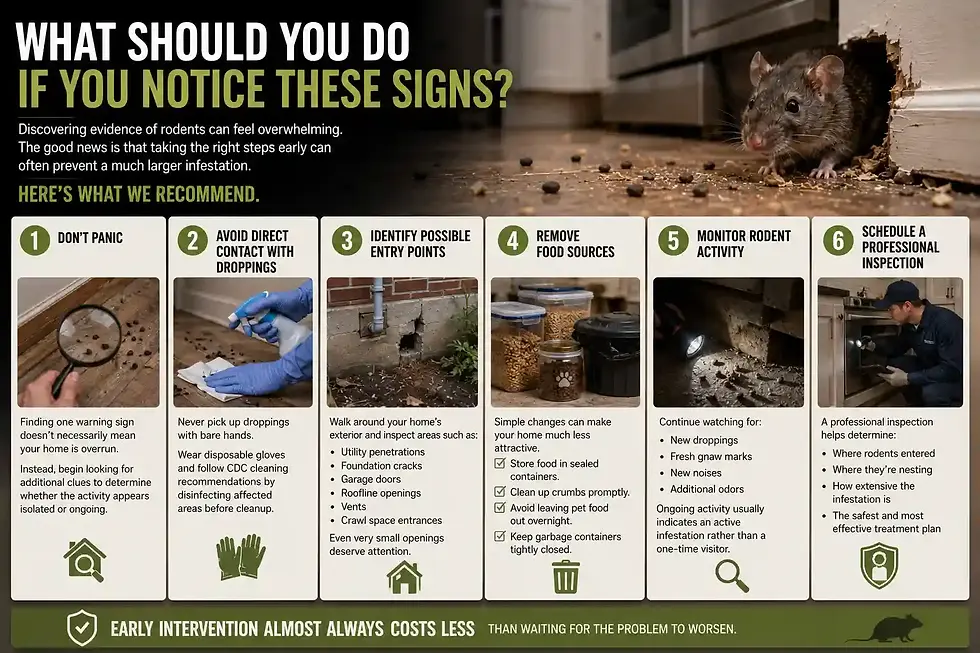
Discovering evidence of rodents can feel overwhelming.
The good news is that taking the right steps early can often prevent a much larger infestation.
Here's what we recommend.
1. Don't Panic
Finding one warning sign doesn't necessarily mean your home is overrun.
Instead, begin looking for additional clues to determine whether the activity appears isolated or ongoing.
2. Avoid Direct Contact With Droppings
Never pick up droppings with bare hands.
Wear disposable gloves and follow CDC cleaning recommendations by disinfecting affected areas before cleanup.
3. Identify Possible Entry Points
Walk around your home's exterior and inspect areas such as:
Utility penetrations
Foundation cracks
Garage doors
Roofline openings
Vents
Crawl space entrances
Even very small openings deserve attention.
4. Remove Food Sources
Simple changes can make your home much less attractive.
Store food in sealed containers.
Clean up crumbs promptly.
Avoid leaving pet food out overnight.
Keep garbage containers tightly closed.
5. Monitor Rodent Activity
Continue watching for:
New droppings
Fresh gnaw marks
New noises
Additional odors
Ongoing activity usually indicates an active infestation rather than a one-time visitor.
6. Schedule a Professional Inspection
A professional inspection helps determine:
Where rodents entered
Where they're nesting
How extensive the infestation is
The safest and most effective treatment plan
Early intervention almost always costs less than waiting for the problem to worsen.
How Professionals Find Hidden Rodent Infestations

One reason DIY treatments sometimes fail is that they only address the rodents homeowners can see.
Professionals look for the hidden problem.
At Accurate Pest Control, our inspections focus on identifying both the rodents and the conditions allowing them to thrive.
Depending on the property, an inspection may include:
Exterior entry-point evaluation
Interior inspection of high-risk areas
Attic assessment
Crawl space inspection
Garage inspection
Utility penetration checks
Nest identification
Dropping analysis
Damage assessment
Exclusion recommendations
In some situations, advanced inspection tools such as moisture meters or monitoring devices may also be used to locate hidden activity.
The goal isn't simply removing rodents today—it's helping prevent them from returning tomorrow.
How to Prevent Rodents from Coming Back

Prevention is always easier—and often less expensive—than dealing with another infestation.
We've found that homeowners who combine good sanitation with routine maintenance significantly reduce their risk of future rodent problems.
Here are some of the most effective prevention strategies.
Seal Exterior Gaps
Close openings around:
Pipes
Utility lines
Doors
Windows
Foundation cracks
Roof penetrations
Store Food Properly
Use airtight containers whenever possible.
Don't forget pet food, bird seed, and livestock feed if applicable.
Eliminate Moisture
Repair:
Leaking faucets
Pipe leaks
Standing water
Drainage issues
Water attracts rodents just as much as food.
Reduce Outdoor Harborage
Trim tree branches away from the roof.
Move firewood away from the house.
Keep shrubs well maintained.
Reduce dense ground cover near the foundation.
Keep Storage Areas Organized
Avoid stacking cardboard boxes directly on the floor.
Use plastic storage bins whenever possible.
Reduce clutter in garages, attics, and basements.
Schedule Routine Inspections
Even if you haven't noticed rodent activity recently, periodic inspections can identify vulnerabilities before they become infestations.
Common Myths About Rodent Infestations

There's plenty of misinformation about mice and rats.
Let's clear up a few common myths.
Myth: If I Only See One Mouse, I Don't Have an Infestation.
Reality: Rodents are excellent at staying hidden. Seeing one often means others are nearby.
Myth: Cats Will Eliminate Every Rodent Problem.
Reality: While some cats catch mice, they rarely eliminate established infestations hidden inside walls or attics.
Myth: Only Dirty Homes Get Rodents.
Reality: Rodents are attracted to food, water, and shelter—not dirt.
Even spotless homes can experience infestations if entry points exist.
Myth: Cheese Is Their Favorite Food.
Reality: Rodents eat a wide variety of foods, including grains, seeds, nuts, pet food, and even garbage.
Myth: Store-Bought Traps Solve Every Infestation.
Reality: Traps may catch individual rodents, but they rarely address hidden nests, entry points, or breeding populations.
When Should You Call a Professional?

While some homeowners attempt DIY solutions, there are situations where professional help is the safest and most effective option.
We recommend scheduling an inspection if you notice:
Multiple droppings appearing regularly
Rodents active during the daytime
Persistent scratching inside walls
Strong unexplained odors
Chewed electrical wiring
Repeated infestations
Nesting materials
Structural damage
Rodents in the attic or crawl space
The sooner an infestation is addressed, the easier it usually is to control.
Waiting often allows rodents more time to reproduce, spread throughout the home, and cause additional damage.
Frequently Asked Questions
What is usually the first sign of a rodent infestation?
For many homeowners, the first signs are small droppings, scratching noises inside walls or ceilings at night, or food packaging with chew marks. Because rodents are nocturnal and avoid people, you may notice these clues long before you ever see a mouse or rat.
Can rodents live inside walls?
Yes. Wall voids provide warmth, protection, and easy access to other parts of the home.
If you hear scratching, squeaking, or scurrying sounds behind the drywall—especially at night—rodents may be nesting or traveling inside your walls.
How can I tell if I have mice or rats?
The easiest clues are the size of the droppings, the amount of damage, and the noises you hear. Mice leave smaller, rice-shaped droppings and make lighter scratching sounds, while rats leave larger droppings and often create louder noises due to their size.
Are rodent infestations dangerous?
They can be. Rodents can contaminate food, damage electrical wiring, spread bacteria through urine and droppings, and introduce parasites like fleas and mites. Prompt removal and proper cleanup help reduce these risks.
How do rodents get into homes?
Rodents enter through surprisingly small openings around foundations, utility lines, vents, rooflines, crawl spaces, and garage doors. Mice can squeeze through openings about the size of a dime, while rats need only slightly larger gaps.
Can I get rid of rodents on my own?
Small, isolated problems may sometimes be managed with traps and sanitation. However, if rodents are nesting inside walls, reproducing, or repeatedly returning, professional treatment is often the most effective way to eliminate the infestation and prevent future problems.
How can I keep rodents from coming back?
Seal exterior entry points, store food in airtight containers, eliminate moisture sources, reduce clutter, maintain your landscaping, and schedule routine inspections. Combining exclusion, sanitation, and ongoing monitoring provides the best long-term protection.
Final Thoughts
Rodents are experts at staying out of sight, but they almost always leave clues behind.
Whether it's scratching inside the walls, droppings in the pantry, damaged food packaging, or strange odors, recognizing these warning signs early can save you from costly repairs, health concerns, and a much larger infestation.
Just as importantly, remember that effective rodent control isn't only about removing the animals you can see. It's about identifying how they entered, locating hidden nesting areas, eliminating the conditions attracting them, and taking steps to prevent them from returning.
At Accurate Pest Control, we've helped homeowners protect their properties from mice, rats, and other nuisance pests through thorough inspections, customized treatment plans, and long-term prevention strategies. If you've noticed any of the warning signs discussed in this guide—or simply want peace of mind—our experienced team is here to help you identify the problem and provide a safe, effective solution before it gets worse.


