


Rodents in the Attic
- Andreyan Solanoy
- Jul 13
- 18 min read

Updated: Jul 22
Signs, Hidden Damage, Removal, Prevention & When to Replace Insulation
There's nothing quite like hearing scratching noises above your ceiling in the middle of the night. At first, you might brush it off as tree branches rubbing against your roof or your house settling. But if those sounds keep coming back, there's a good chance you're sharing your home with unwanted guests.
Rodents are among the most common household pests, and the attic is one of their favorite places to settle. It's warm, quiet, protected from predators, and often undisturbed for months at a time. Unfortunately, while rodents may stay out of sight, they rarely stay harmless.
A small mouse or rat infestation can quickly turn into a much bigger problem. Rodents chew electrical wiring, contaminate insulation, leave behind droppings and urine, damage stored belongings, and create health risks for everyone living in the home. What starts as a few nighttime noises can eventually lead to expensive repairs if left unchecked.
According to the National Pest Management Association (NPMA), rodents invade millions of homes every year, especially as outdoor temperatures begin to drop in the fall and winter.
The good news is that the earlier you recognize the warning signs, the easier—and often less expensive—it is to solve the problem.
In this guide, we'll explain:
Why rodents choose attics
The most common signs of an infestation
The hidden damage they can cause
When attic insulation should be replaced
The safest removal options
How to prevent rodents from coming back
Whether you've heard suspicious noises overhead or simply want to protect your home, this guide will help you make informed decisions before a minor pest problem turns into a costly repair.
Why Rodents Love Attics

Many homeowners wonder why rodents end up in the attic instead of the basement or garage. The answer is simple: attics provide nearly everything rodents need to survive and reproduce.
Understanding what attracts them is the first step toward preventing future infestations.
A Warm, Safe Place to Live
Unlike the outdoors, your attic offers protection from rain, snow, predators, and extreme temperatures.
During colder months, rats and mice actively search for warm places to nest. Once they find a way inside, they often stay because your attic provides a stable environment year-round.
Even in warmer climates, attics offer shelter from predators and daily disturbances.
Plenty of Nesting Materials
Attics contain many materials rodents can use to build comfortable nests.
Common nesting materials include:
Fiberglass insulation
Cardboard boxes
Paper products
Fabric
Holiday decorations
Stored clothing
Dryer lint
Leaves carried in from outside
Female rodents can build nests surprisingly quickly, especially when food and shelter are readily available nearby.
Minimal Human Activity
Most homeowners rarely visit their attic.
That means rodents can live there for weeks—or even months—without being noticed. During that time, they continue chewing, nesting, reproducing, and expanding their territory.
Unfortunately, by the time homeowners hear scratching noises or discover droppings, the infestation has often grown larger than expected.
Easy Access From the Outside
Rodents don't need a large opening to get inside your home.
Mice can squeeze through openings as small as ¼ inch, while rats can fit through gaps about ½ inch wide.
These tiny openings are commonly found around:
Roof vents
Plumbing penetrations
Damaged soffits
Loose flashing
Chimneys
Utility line openings
Roof edges
A gap that seems insignificant to a homeowner can be a wide-open doorway for a determined rodent.
Which Rodents Are Most Common in Attics?

Not all rodents behave the same way. Identifying which species has invaded your attic helps determine the best removal strategy and prevention plan.
Roof Rats
As their name suggests, roof rats are excellent climbers.
They frequently enter homes by climbing:
Trees
Utility lines
Vines
Fences
Once on the roof, they exploit small openings to access the attic.
Roof rats are particularly active after sunset and often create noticeable scratching or running sounds overnight.
They commonly chew:
Electrical wiring
Wooden framing
Plastic piping
Insulation
Norway Rats
Norway rats are generally larger than roof rats and prefer ground-level access.
Although they often begin in crawl spaces or basements, they can eventually make their way into attic spaces by traveling inside wall voids.
Because of their size and strength, Norway rats can cause significant structural damage if an infestation goes unchecked.
House Mice
House mice are among the most common household pests across North America.
Their small size allows them to enter through incredibly tiny openings that homeowners rarely notice.
Although individual mice cause relatively little damage, they reproduce rapidly.
A single pair of mice can lead to a much larger infestation in just a few months if favorable conditions remain.
Quick Comparison
Rodent | Entry Opening | Typical Behavior | Common Damage |
House Mouse | About ¼ inch | Excellent climber, reproduces quickly | Chewed wires, insulation damage, droppings |
Roof Rat | About ½ inch | Climbs trees and roofs | Electrical damage, nesting, contamination |
Norway Rat | About ½ inch | Usually enters from ground level | Structural damage, gnawing, contamination |
Regardless of the species, none belong inside your home. Prompt identification and removal help minimize damage and reduce health risks.
12 Warning Signs of Rodents in Your Attic
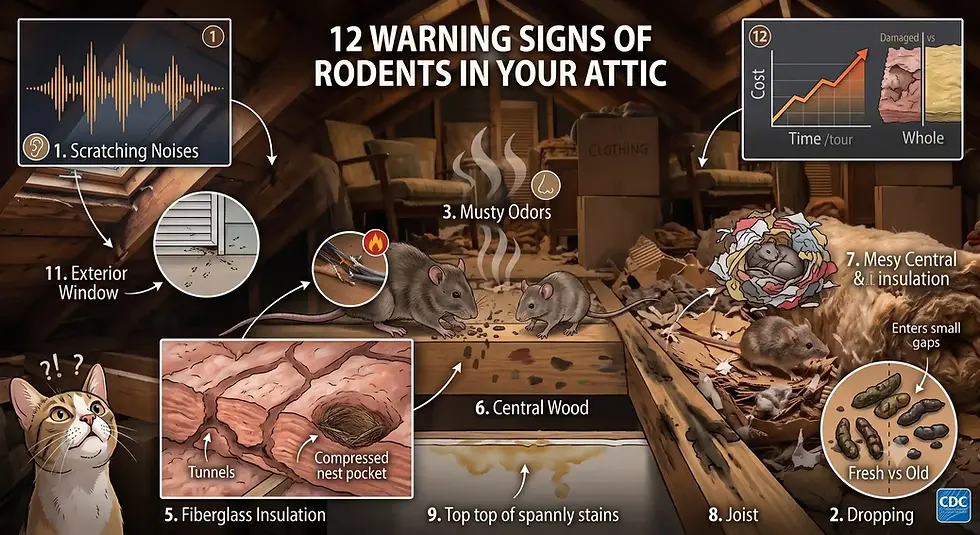
Rodents usually stay hidden during the day, but they almost always leave behind evidence of their presence.
Knowing what to look for can help you catch an infestation before it becomes much more expensive to resolve.
1. Scratching or Scurrying Noises
One of the earliest warning signs is hearing scratching, running, or light thumping sounds above your ceiling.
These noises are typically most noticeable:
At night
Early morning
Shortly after sunset
Since rodents are primarily nocturnal, nighttime activity is a strong indicator that something may be living in your attic.
2. Rodent Droppings
Rodent droppings are one of the clearest signs of an active infestation.
You may find them:
Near attic entry points
Around stored boxes
Along insulation
Close to roof framing
Fresh droppings are dark and moist, while older droppings become dry and brittle.
Never sweep or vacuum rodent droppings without taking proper safety precautions.
Editor's Note: Include current CDC recommendations for safely cleaning rodent droppings and contaminated areas.
3. Strong Musty Odors
Rodents leave behind urine that produces a persistent ammonia-like smell.
As urine accumulates, the odor can spread throughout the attic and eventually enter living spaces through HVAC systems or ceiling openings.
Many homeowners notice the smell before they ever see a rodent.
4. Chewed Electrical Wiring
Rodents constantly gnaw because their teeth never stop growing.
Unfortunately, electrical wiring is a favorite target.
Damaged wires can:
Interrupt electrical service
Damage appliances
Increase the risk of electrical fires
This is one reason rodent infestations should never be ignored.
5. Damaged Insulation
Rodents frequently tunnel through insulation to create nesting areas.
Signs include:
Flattened insulation
Tunnels
Nesting pockets
Compressed areas
Droppings mixed into insulation
Damaged insulation loses much of its effectiveness, which can reduce your home's energy efficiency.
6. Gnaw Marks
Inspect exposed wood, plastic, cardboard, and stored belongings.
Fresh gnaw marks often appear lighter in color because rodents expose new material as they chew.
7. Visible Nests
Rodent nests often resemble messy balls made from shredded materials.
They may contain:
Paper
Fabric
Insulation fibers
Leaves
String
Cardboard
Nests are commonly hidden behind insulation or in quiet corners of the attic.
8. Grease Marks Along Travel Paths
As rodents travel the same routes repeatedly, oils from their fur leave dark smudge marks along beams, walls, and pipes.
These marks often indicate well-established rodent pathways.
9. Ceiling Stains
Heavy infestations can eventually cause urine to soak through insulation and stain ceiling drywall below.
These stains may appear yellowish or brown and often worsen over time.
10. Unusual Pet Behavior
Dogs and cats frequently detect rodents before humans do.
If your pet constantly stares at the ceiling, paws at walls, or reacts to sounds overhead, it may be alerting you to rodent activity.
11. Visible Entry Points Outside
Walk around your home and inspect for openings around:
Roof edges
Soffits
Vents
Utility lines
Chimneys
Even small gaps deserve attention because rodents are remarkably flexible.
12. Rising Energy Bills
Rodents damage insulation by compressing it and contaminating it with nesting activity.
When insulation loses its ability to regulate temperature, your heating and cooling systems have to work harder.
If your utility bills are increasing without an obvious explanation, damaged attic insulation could be one contributing factor.
How Rodents Get Into Your Attic

Many homeowners are surprised to learn that rodents don't need a broken window or an open door to invade their home. In most cases, they slip through small openings that have gone unnoticed for years.
Understanding these entry points can help you stop an infestation before it starts.
Roof Vents
Roof vents are designed to improve attic ventilation, but damaged or poorly screened vents can also become easy access points for rodents.
Over time, weather exposure can weaken vent covers or create gaps that determined rats and mice can exploit.
Damaged Soffits and Fascia
Soffits and fascia protect the edges of your roof, but age, moisture, and storm damage can create openings large enough for rodents to enter.
Loose or rotting materials should be repaired promptly to reduce the risk of infestation.
Chimneys
An uncapped chimney can provide a direct path into your attic or wall cavities.
Installing a properly fitted chimney cap helps keep rodents—and other wildlife—out without affecting ventilation.
Utility Line Openings
Electrical cables, plumbing pipes, and HVAC lines often pass through exterior walls and the roof.
If these penetrations aren't properly sealed, they can become hidden entry points.
Overhanging Tree Branches
Roof rats are exceptional climbers.
Tree branches that touch or hang close to your roof essentially create a bridge straight to your attic.
Keeping branches trimmed back can significantly reduce the chances of rodents gaining roof access.
The Hidden Damage Rodents Can Cause in Your Attic
Many homeowners assume rodents are simply a nuisance. While the scratching noises and occasional droppings are certainly unpleasant, the real concern lies in the damage that often goes unnoticed.
Rodents don't just occupy your attic—they actively alter it. As they search for food, build nests, and establish pathways, they can compromise your home's safety, energy efficiency, and structural integrity.
The longer an infestation goes untreated, the more expensive the repairs can become.
Chewed Electrical Wiring Creates a Serious Fire Risk
One of the most dangerous consequences of a rodent infestation is damaged electrical wiring.
Rodents have teeth that continuously grow throughout their lives. To keep those teeth from becoming too long, they instinctively chew on hard materials—including electrical wires.
Over time, this behavior can strip away the protective insulation around wires, exposing live electrical conductors.
Potential consequences include:
Electrical shorts
Flickering lights
Tripped circuit breakers
Malfunctioning outlets
Increased fire risk
While not every chewed wire leads to a fire, the possibility is serious enough that damaged wiring should always be inspected by a qualified electrician after a rodent infestation.
Contaminated Attic Insulation
Insulation does much more than regulate your home's temperature. It also helps improve energy efficiency, reduce noise, and maintain indoor comfort throughout the year.
Unfortunately, rodents can quickly ruin it.
As rodents travel through the attic, they:
Compress insulation
Dig tunnels
Build nests
Leave droppings
Urinate throughout the material
Once insulation becomes heavily contaminated, it can no longer perform as intended.
Contaminated insulation may also contribute to unpleasant odors that spread into your living spaces through air leaks or HVAC systems.
Even if the insulation still appears intact from a distance, hidden contamination beneath the surface can reduce its effectiveness.
Structural Damage That Adds Up Over Time
Rodents are persistent chewers.
Beyond electrical wiring, they may gnaw on:
Roof decking
Wooden rafters
Support beams
Drywall
Plastic piping
Storage containers
While a few chew marks might seem minor, months of continuous activity can weaken building materials and create openings that allow moisture or other pests to enter.
Small repairs today are often far less expensive than major structural repairs later.
Damage to HVAC Systems
Your attic may house important heating and cooling components, including ductwork.
Rodents sometimes chew flexible ducts or nest around HVAC equipment, which can lead to:
Reduced airflow
Higher utility bills
Poor indoor air quality
Uneven heating or cooling
In some cases, contaminated ducts may also circulate dust, allergens, and unpleasant odors throughout the home.
Destroyed Storage Items
Many families use their attic as extra storage space.
Unfortunately, rodents aren't selective about what they damage.
They frequently chew through:
Holiday decorations
Family keepsakes
Clothing
Books
Cardboard boxes
Furniture
Children's toys
Even items stored in plastic bins aren't always safe if rodents find a way inside.
Some possessions can be cleaned and restored, while others may need to be discarded due to contamination.
Higher Energy Bills
One hidden consequence many homeowners don't immediately connect to rodents is an increase in energy costs.
When insulation is flattened, tunneled through, or contaminated, it loses much of its insulating value.
As a result:
Warm air escapes more easily during winter.
Cool air escapes faster during summer.
HVAC systems run longer.
Monthly utility costs increase.
If you've noticed rising energy bills without a clear explanation, damaged attic insulation may be part of the problem.
Health Risks You Shouldn't Ignore
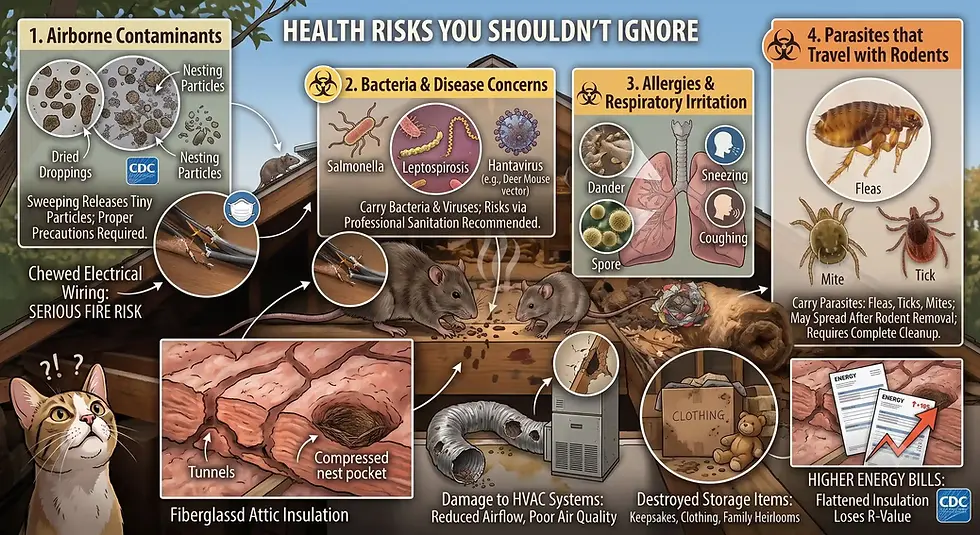
Beyond property damage, rodents can also affect your family's health.
This doesn't mean every rodent infestation automatically leads to illness. However, rodents can contaminate areas of the home with droppings, urine, saliva, and nesting materials, making proper cleanup an important part of the removal process.
Taking the appropriate precautions helps reduce unnecessary health risks.
Airborne Contaminants
One of the biggest concerns involves disturbing dried rodent droppings or nesting materials.
Sweeping or vacuuming contaminated areas without proper precautions can release tiny particles into the air.
For this reason, health authorities recommend using safe cleanup methods rather than dry sweeping.
Bacteria and Disease Concerns
Rodents are known to carry bacteria and viruses that may pose health risks under certain conditions.
Examples include:
Salmonella
Leptospirosis
Hantavirus (primarily associated with certain rodent species and regions)
It's important to present these risks accurately and without creating unnecessary fear.
Most homeowners are unlikely to become ill simply because rodents are present. The greater concern is prolonged exposure to contaminated materials or improper cleanup practices.
Professional sanitation is often recommended after a significant infestation because it helps remove contamination that isn't always visible.
Allergies and Respiratory Irritation
Rodent droppings, urine, and dander may trigger allergy symptoms in sensitive individuals.
Common symptoms include:
Sneezing
Coughing
Watery eyes
Nasal congestion
Asthma flare-ups
Children, older adults, and individuals with respiratory conditions may be more sensitive to poor indoor air quality caused by rodent contamination.
Parasites That Travel With Rodents
Rodents sometimes carry:
Fleas
Mites
Ticks
While these parasites typically remain with their host, they may spread into other areas of the home after rodents are removed if proper sanitation isn't performed.
This is another reason complete cleanup is just as important as removing the rodents themselves.
Do You Need to Replace Attic Insulation?

One of the most common questions homeowners ask after discovering rodents is:
"Do I have to replace all of my attic insulation?"
The answer depends on the severity of the infestation.
Not every situation requires complete insulation replacement, but ignoring contaminated insulation can lead to ongoing odors, reduced energy efficiency, and continued health concerns.
A professional inspection can help determine the most appropriate solution.
When Insulation Can Often Be Saved
If the infestation is discovered early, replacement may not be necessary.
Cleaning or localized repairs may be enough when:
Rodent activity is limited to one small area.
Only minor contamination is present.
The insulation still maintains its original thickness.
There are no persistent odors.
No significant nesting has occurred.
In these situations, targeted removal of affected insulation followed by sanitization may restore the attic without requiring a complete replacement.
When Replacement Is Usually Recommended
Replacement becomes more likely when contamination is widespread.
Common indicators include:
Extensive rodent droppings
Strong urine odors
Multiple nests
Large tunnel systems
Severely compressed insulation
Moisture damage
Mold growth associated with contamination
Replacing damaged insulation also provides an opportunity to inspect the attic thoroughly, seal entry points, and restore your home's energy efficiency.
Cleaning vs. Replacement
Cleaning May Be Enough | Replacement Is Often Best |
Minor activity | Large infestation |
Localized contamination | Widespread contamination |
Insulation remains effective | Flattened or damaged insulation |
No lingering odor | Persistent odor throughout attic |
Limited nesting | Extensive nesting and tunneling |
The goal isn't simply to make the attic look clean—it's to ensure your home is safe, healthy, and properly protected moving forward.
DIY vs. Professional Rodent Removal
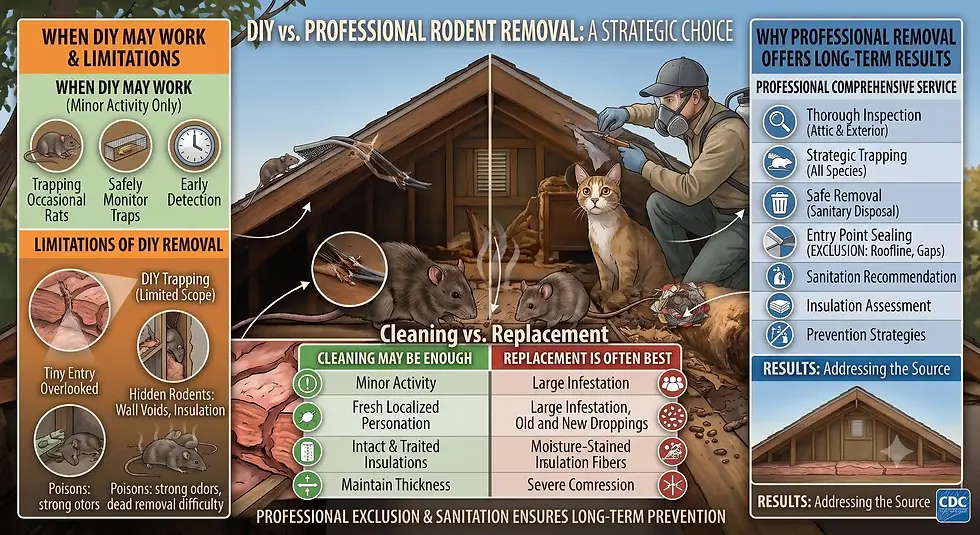
When homeowners first discover rodents, it's natural to wonder whether they can handle the problem themselves.
The answer depends on the size of the infestation and how comfortable you are identifying entry points and safely handling contaminated materials.
When DIY May Work
For very small, newly discovered infestations, homeowners may have success with basic trapping.
DIY approaches may be appropriate if:
You hear only occasional activity.
There's minimal evidence of rodents.
The infestation is caught very early.
You can safely monitor traps.
However, trapping alone rarely solves the entire problem.
Without sealing entry points, new rodents can quickly replace the ones you've removed.
The Limitations of DIY Removal
Many homeowners eliminate one or two rodents and assume the problem is gone.
Unfortunately, rodents often remain hidden inside:
Wall voids
Insulation
Roof corners
Crawl spaces
It's also easy to overlook tiny entry points around the roofline that continue allowing rodents inside.
Using poison also presents challenges. Rodents may die in inaccessible areas, leading to strong odors and difficult removal.
Why Professional Removal Offers Long-Term Results
Professional rodent control focuses on the entire infestation—not just the rodents you can see.
A comprehensive service typically includes:
Thorough attic inspection
Identification of rodent species
Strategic trapping
Safe removal
Entry point sealing (exclusion)
Sanitation recommendations
Insulation assessment
Prevention strategies
Instead of treating the symptoms, professionals address the source of the problem.
That greatly reduces the likelihood of future infestations.
What Happens During a Professional Rodent Inspection?

Many homeowners expect an inspection to involve little more than checking for droppings.
In reality, a professional inspection is much more comprehensive.
The goal is to determine how rodents entered the home, where they're nesting, the extent of the damage, and the best strategy for long-term prevention.
A typical inspection includes the following steps.
Exterior Inspection
We begin by carefully examining the outside of the home.
This helps us identify potential entry points before we even enter the attic.
Areas commonly inspected include:
Roof vents
Soffits and fascia
Chimneys
Roof flashing
Utility penetrations
Foundation gaps
Tree branches touching the roof
Because rodents can squeeze through surprisingly small openings, even minor gaps receive close attention.
Interior Attic Inspection
Inside the attic, we look for evidence of both current and past rodent activity.
This includes checking for:
Droppings
Urine staining
Nesting materials
Gnaw marks
Rodent pathways
Damaged insulation
Chewed wiring
Structural damage
We also assess whether the infestation appears active or if signs indicate an older problem that's already been resolved.
Damage Assessment
Once the inspection is complete, we evaluate how extensively the rodents have affected the attic.
This helps determine whether the insulation can be cleaned, partially replaced, or should be removed and replaced entirely.
We also identify any repairs that may be needed before the attic is fully restored.
How Professionals Remove Rodents from an Attic

Successfully removing rodents isn't just about catching a few mice or rats. It's about solving the problem at its source and making sure they don't come back.
At Accurate Pest Control, we believe long-term results come from a complete rodent management plan—not a quick fix. That's why professional rodent removal typically follows several important steps.
1. Thorough Inspection
Every successful treatment begins with a detailed inspection.
Before placing traps or recommending repairs, we identify:
The type of rodent involved
Where they're entering the home
Areas where they're nesting
The extent of the damage
Whether the infestation is active or inactive
A proper inspection helps us tailor the removal strategy to your home's specific needs.
2. Strategic Rodent Removal
Once we've identified the infestation, we use the most appropriate removal methods based on the species, activity level, and layout of the attic.
Depending on the situation, this may include professionally placed traps and ongoing monitoring to ensure the infestation is fully eliminated.
Our goal isn't simply to remove visible rodents—it's to interrupt the entire infestation.
3. Sealing Entry Points (Rodent Exclusion)
One of the biggest mistakes homeowners make is removing rodents without closing the holes they used to get inside.
Even a successful trapping program won't provide lasting results if new rodents can enter the attic the following week.
Rodent exclusion may involve sealing:
Roof gaps
Vent openings
Utility penetrations
Damaged soffits
Fascia openings
Small cracks around the home's exterior
Because rodents can squeeze through surprisingly small spaces, attention to detail is essential.
4. Sanitizing Contaminated Areas
After the rodents are gone, the cleanup process begins.
Droppings, urine, nesting materials, and contaminated debris should be removed using proper sanitation procedures.
Professional cleaning helps:
Reduce odors
Improve indoor air quality
Minimize health risks
Prepare the attic for insulation repairs if needed
For larger infestations, sanitation is just as important as rodent removal itself.
5. Repairing and Restoring the Attic
If rodents have damaged insulation, wiring, or other building materials, those issues should be addressed before considering the project complete.
Restoration may include:
Replacing damaged insulation
Repairing chewed wiring (by a licensed electrician)
Fixing damaged vents or soffits
Sealing structural gaps
Completing these repairs helps restore your home's comfort, safety, and energy efficiency.
6. Ongoing Monitoring and Prevention
Even after the infestation has been eliminated, periodic inspections can help ensure rodents don't return.
Monitoring is especially valuable for homes located near:
Wooded areas
Open fields
Farms
Parks
Water sources
Early detection often prevents small problems from becoming major infestations.
How to Keep Rodents Out of Your Attic
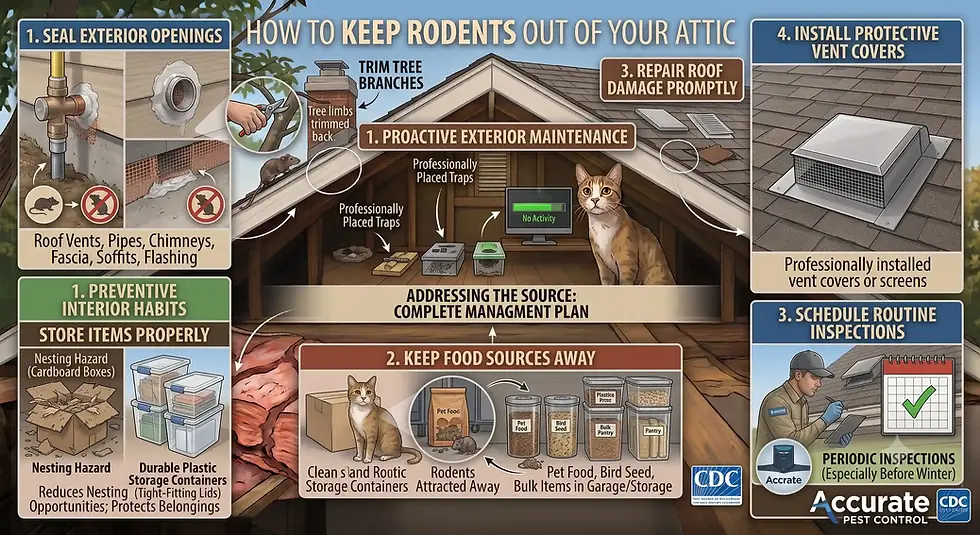
The best way to deal with rodents is to prevent them from entering your home in the first place.
While no home is completely immune, a few proactive maintenance steps can significantly reduce the likelihood of an infestation.
Seal Exterior Openings
Walk around your home at least twice a year and inspect for gaps around:
Roof vents
Utility pipes
Chimneys
Fascia boards
Soffits
Roof flashing
Even openings that seem insignificant can provide easy access for mice or rats.
Trim Tree Branches
Roof rats are exceptional climbers.
Branches that touch or overhang your roof act like bridges leading directly to your attic.
As a general rule, keep tree limbs trimmed several feet away from your roofline whenever possible.
Repair Roof Damage Promptly
Missing shingles, damaged flashing, loose vent covers, and deteriorating roofing materials can all create opportunities for rodents.
Routine roof maintenance helps protect your home from both pests and water damage.
Install Protective Vent Covers
Attic vents need proper airflow, but they also need protection.
Professionally installed vent covers or screens help keep rodents out while maintaining adequate ventilation.
Store Items Properly
If you use your attic for storage, avoid leaving items in cardboard boxes for long periods.
Instead, choose durable plastic storage containers with tight-fitting lids.
This reduces nesting opportunities and protects your belongings if rodents ever gain access.
Keep Food Sources Away
While food is rarely stored in attics, pet food, bird seed, and bulk pantry items kept in garages or nearby storage areas can attract rodents to your property.
Proper food storage reduces the overall appeal of your home.
Schedule Routine Inspections
Many rodent infestations go unnoticed until damage becomes extensive.
Scheduling periodic inspections—especially before winter—can identify small problems before they require costly repairs.
How Much Does Rodent Damage Cost?
One of the most common questions homeowners ask is:
"How expensive is rodent damage?"
The answer depends on several factors, including:
The size of the infestation
How long rodents have been present
The extent of contamination
Whether electrical or structural damage has occurred
Whether insulation needs replacement
Rather than focusing on an average price, it's more helpful to understand what influences the overall cost.
Service | Cost Depends On |
Inspection | Home size and accessibility |
Rodent Removal | Species, infestation size, treatment complexity |
Rodent Exclusion | Number and size of entry points |
Attic Sanitization | Level of contamination |
Insulation Replacement | Square footage and insulation type |
Electrical Repairs | Extent of wire damage |
Structural Repairs | Damage to framing, drywall, or roofing |
The sooner rodents are discovered, the more likely repairs will remain limited.
Waiting several months often allows damage—and repair costs—to increase significantly.
When Should You Call a Professional?

Not every unusual attic noise means you have rodents.
However, certain warning signs shouldn't be ignored.
We recommend scheduling a professional inspection if you notice:
Persistent scratching or scurrying noises
Rodent droppings
Strong ammonia-like odors
Chewed electrical wiring
Damaged attic insulation
Visible nests
Multiple rodent sightings
New openings around the roofline
Repeated infestations despite DIY efforts
A professional inspection can determine whether rodents are currently active, assess any damage they've caused, and identify the most effective solution before the problem escalates.
Frequently Asked Questions
What are the first signs of rodents in the attic?
The earliest signs often include scratching noises at night, droppings, unusual odors, gnaw marks, damaged insulation, or pets reacting to activity above the ceiling.
How do rodents get into an attic?
Rodents commonly enter through gaps around roof vents, soffits, fascia boards, chimneys, plumbing penetrations, utility openings, or tree branches that provide roof access.
Are rodents in the attic dangerous?
Yes. Beyond damaging insulation and stored belongings, rodents can chew electrical wiring, contaminate surfaces with droppings and urine, and negatively affect indoor air quality.
Can rodents damage attic insulation?
Absolutely. Rodents tunnel through insulation, build nests, compress the material, and contaminate it with droppings and urine, reducing its effectiveness.
Should attic insulation always be replaced after rodents?
Not always. Minor, localized infestations may only require cleaning or partial replacement. Severe contamination, widespread nesting, or extensive damage often makes full replacement the better option.
Do rodents leave on their own?
Unfortunately, no.
Once rodents find reliable shelter, warmth, and nearby food sources, they're unlikely to leave voluntarily.
Can rodents chew through electrical wires?
Yes. Rodents constantly gnaw to keep their teeth from overgrowing, and electrical wiring is one of the materials they frequently damage.
Is it safe to clean rodent droppings yourself?
It can be, but proper precautions are essential. Follow current CDC recommendations, including wearing appropriate protective equipment, ventilating the area, and disinfecting droppings before cleanup. Avoid dry sweeping or vacuuming contaminated materials.
How can I prevent rodents from returning?
Long-term prevention includes sealing entry points, repairing roof damage, trimming overhanging tree branches, protecting attic vents, storing belongings properly, and scheduling routine inspections.
When is rodent activity most common?
Rodent activity can occur year-round, but many homeowners notice increased infestations during the fall and winter as rodents seek warmer shelter indoors.
How long does professional rodent removal take?
The timeline varies depending on the size of the infestation, the species involved, and whether repairs or insulation replacement are needed. Minor infestations may be resolved relatively quickly, while larger infestations can require multiple visits and follow-up monitoring.
Why do rodents keep coming back?
Recurring infestations usually indicate that one or more entry points haven't been sealed or that nearby conditions continue to attract rodents. Effective rodent control combines removal, exclusion, sanitation, and ongoing prevention.
Conclusion
Rodents in your attic are more than just an inconvenience—they're a warning sign that your home may be vulnerable to hidden damage, contamination, and future infestations.
The good news is that acting early can make a significant difference. By recognizing the warning signs, addressing entry points, and taking the proper steps to remove rodents safely, you can protect your home's structure, improve indoor air quality, and avoid more expensive repairs down the road.
While some minor infestations may seem manageable, larger or recurring rodent problems often require a more comprehensive approach. Effective rodent control isn't just about removing the animals you can see. It's about identifying how they got inside, eliminating the conditions that attracted them, repairing any damage they've caused, and helping ensure they don't return.
At Accurate Pest Control, we take that comprehensive approach seriously. Our experienced team provides thorough inspections, effective rodent removal, professional exclusion services, and practical prevention strategies tailored to your home. Whether you've just started hearing noises in the attic or you're dealing with extensive rodent damage, we're here to help you restore a safe, healthy, and rodent-free home with solutions designed for long-term peace of mind.


