The Complete Wasp Control Guide: How to Identify, Remove & Prevent Wasps Around Your Home (2026)

Few things can ruin a relaxing afternoon outdoors faster than spotting wasps flying around your deck, patio, or front porch. At first, it may seem like just one or two insects passing through. But before long, you notice a steady stream of wasps disappearing under your roofline or into a small hole in the ground.
That's usually a sign of a nearby nest.
Wasps become increasingly active as temperatures rise, and by late summer, colonies can contain hundreds—or even thousands—of workers depending on the species. During this stage, they become far more protective of their nests and more likely to sting when disturbed.
For most homeowners, the biggest question is simple:
Can you safely remove the nest yourself, or is it time to call a professional?
In this complete guide, we'll explain everything you need to know—from identifying common wasps and understanding what attracts them to your property to preventing future infestations and knowing when professional treatment is the safest choice.
What Are Wasps?

Wasps are flying insects that play an important role in the environment. Many species prey on caterpillars, flies, aphids, and other insects that damage gardens and crops.
Others help with pollination while searching for nectar.
However, once they begin nesting around homes, their helpful role quickly becomes a safety concern.
Unlike honey bees, many wasp species can sting multiple times because they don't lose their stinger after attacking. They're also highly territorial and will aggressively defend their colony if they believe it's threatened.
Wasps vs. Bees
Feature | Wasps | Bees |
Body Shape | Slim with narrow waist | Round and fuzzy |
Sting | Multiple stings | Usually one sting |
Temperament | More aggressive | Generally defensive |
Diet | Sugary foods, insects | Nectar and pollen |
Nest Material | Paper-like fibers | Wax |
Understanding the difference helps determine the safest approach for removal since bee colonies often require relocation rather than extermination.
Common Types of Wasps Found Around Homes

Not every wasp behaves the same way. Correct identification is the first step toward choosing the right treatment.
Paper Wasps
Paper wasps are among the most recognizable species in residential neighborhoods.
They build umbrella-shaped paper nests under roof eaves, porch ceilings, decks, and outdoor light fixtures. While they're generally less aggressive than yellow jackets, they'll defend their nest if disturbed.
Identification
Long legs hanging while flying
Brown with yellow markings
Open honeycomb-style nests
Yellow Jackets
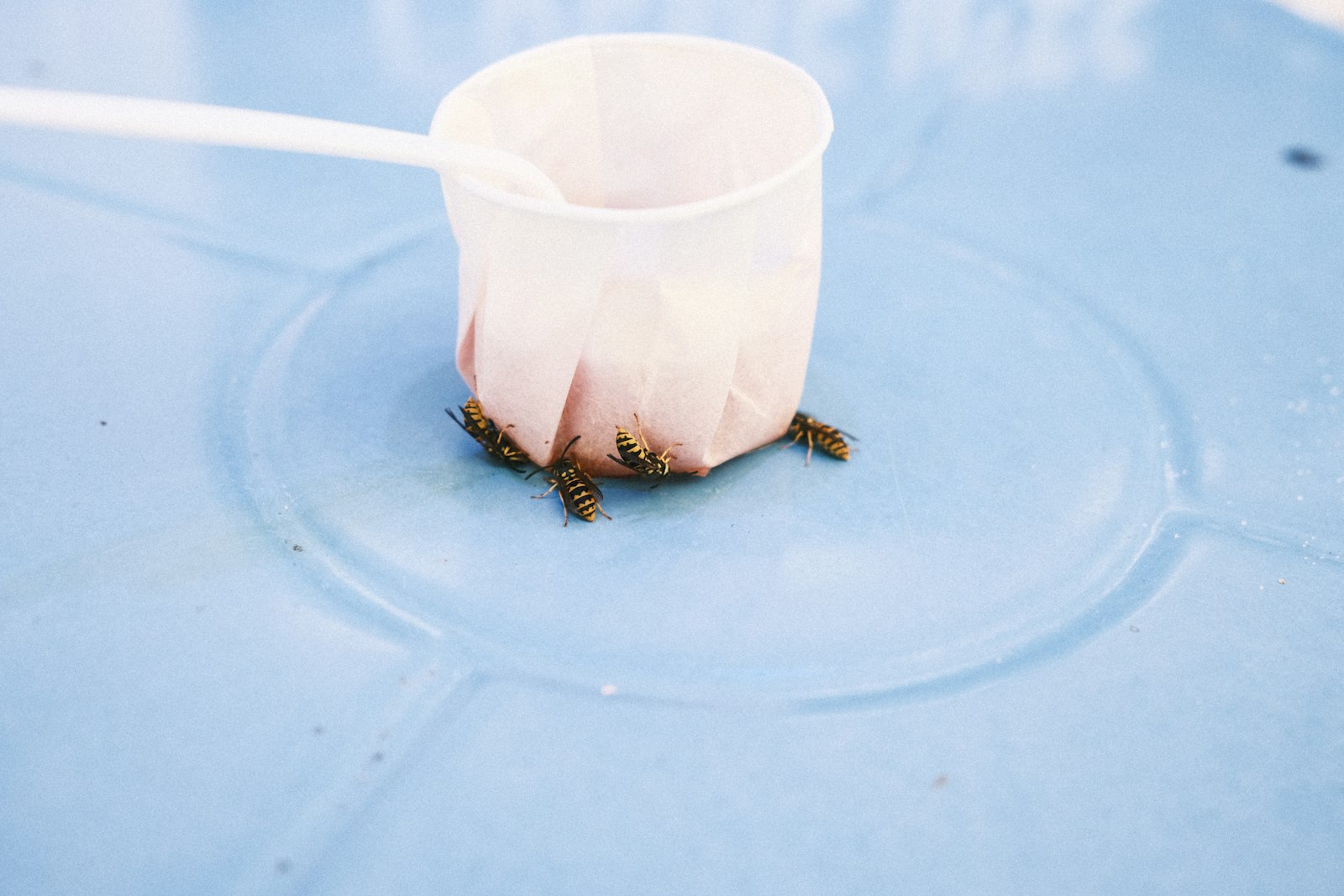
Yellow jackets cause many of the painful stinging incidents homeowners experience every year.
They're attracted to sugary drinks, outdoor meals, overflowing trash cans, and pet food.
Unlike paper wasps, yellow jackets often build underground nests, making them difficult to spot until someone accidentally walks nearby.
Identification
Bright yellow and black body
Fast, aggressive flight
Ground nests or wall voids
Mud Daubers
Mud daubers are solitary wasps that rarely become aggressive.
They build tube-like nests from mud on garages, sheds, and ceilings. While they may look intimidating, they're considered beneficial because they feed on spiders.
European Hornets
European hornets are significantly larger than most common wasps.
They often nest inside hollow trees, attics, barns, and wall cavities. Because of their size and powerful sting, professional removal is recommended.
Bald-Faced Hornets
Despite their name, bald-faced hornets are actually a type of wasp.
Their large football-shaped aerial nests can contain hundreds of workers by late summer.
They aggressively defend their colony, making DIY removal especially risky.
What Attracts Wasps to Your Property?

Wasps don't choose a nesting site randomly. They're constantly searching for three essentials: food, water, and shelter.
If your property offers all three, it becomes much more attractive.
Food Sources
Common attractants include:
Sugary drinks
Outdoor dining areas
Fruit trees
Fallen fruit
Open garbage cans
Pet food
Compost piles
Water Sources
Bird baths, leaking faucets, clogged gutters, and standing water provide hydration during hot weather.
Shelter
Protected areas such as:
Roof eaves
Decks
Attics
Wall voids
Sheds
Garages
offer ideal nesting conditions.
Quick Prevention Checklist
✔ Keep trash containers tightly sealed
✔ Clean outdoor eating areas promptly
✔ Pick up fallen fruit
✔ Seal cracks around your home's exterior
✔ Trim overgrown shrubs
✔ Repair damaged siding and soffits
✔ Remove standing water
Signs You Have a Wasp Infestation

The earlier you identify an infestation, the easier it usually is to address.
Watch for these warning signs:
Frequent wasp activity around one area
Wasps entering small gaps in walls or siding
Buzzing sounds inside walls
Visible paper nests
Increased wasp traffic near rooflines
Ground holes with constant insect activity
Chewed wood around fences or decks
A single wasp isn't usually cause for concern.
Repeated activity in the same location often indicates an active nest nearby.
Where Do Wasps Build Their Nests?

Different species prefer different nesting locations.
Common nesting sites include:
Roof eaves
Porch ceilings
Attics
Garages
Sheds
Wall voids
Tree branches
Bushes
Children's play sets
Mailboxes
Deck railings
Underground burrows
Many homeowners never notice these nests until the colony has grown substantially.
Why Wasp Nests Become More Dangerous Over Time

A newly established nest in spring may contain only a queen and a handful of workers.
By midsummer, that same colony can grow dramatically as new workers continuously expand the nest.
Late summer is typically when homeowners notice increased aggression.
At this stage:
Food becomes scarcer.
Colonies reach peak population.
Workers aggressively defend the nest.
Encounters with people become more common.
Are Wasps Dangerous?

For most people, a wasp sting causes temporary pain, swelling, and redness.
However, multiple stings or allergic reactions can quickly become serious.
Certain individuals face higher risks, including:
Young children
Older adults
Pets
People with severe insect sting allergies
Seek immediate medical attention if someone experiences:
Difficulty breathing
Swelling of the throat or tongue
Chest tightness
Severe dizziness
Loss of consciousness
Widespread hives
How to Get Rid of Wasps Safely

Many homeowners wonder whether DIY removal is enough.
The answer depends on the nest's size, location, and species.
Small, Accessible Nests
For very small nests that are easily accessible, homeowners may use commercially available wasp sprays while wearing proper protective clothing.
Treatments are generally safest during the evening or early morning when wasps are less active.
Always follow product instructions carefully.
Never Do These Things
Avoid these dangerous mistakes:
Burning nests
Knocking nests down
Spraying nests with a garden hose
Pouring gasoline into nests
Sealing entry holes before eliminating the colony
These methods often provoke aggressive attacks and rarely solve the problem.
When Should You Call a Professional Wasp Exterminator?

Professional treatment is usually the safest option when:
The nest is larger than a softball.
The nest is inside the walls.
Wasps are entering your home.
The colony is underground.
Multiple nests are present.
Someone in your household has an allergy.
You cannot safely reach the nest.
Attempting removal under these conditions significantly increases the risk of multiple stings.
What Happens During Professional Wasp Removal?

Professional exterminators follow a structured process designed to eliminate the colony while minimizing risks.
The process generally includes:
Thorough inspection
Species identification
Nest location
Targeted treatment
Safe nest removal when appropriate
Follow-up inspection
Prevention recommendations
Many companies also use Integrated Pest Management (IPM) principles to reduce future infestations with minimal environmental impact.
DIY vs. Professional Wasp Removal
DIY | Professional |
Lower upfront cost | Higher long-term value |
Limited equipment | Specialized tools |
Higher sting risk | Safer treatment |
May miss hidden nests | Complete inspection |
Temporary solution | Long-term prevention |
While DIY methods can work for minor situations, professional service provides greater peace of mind for larger infestations.
Seasonal Wasp Activity Calendar

Spring
Queens emerge from overwintering and begin building new nests.
Summer
Worker populations increase rapidly.
Late Summer
Colonies reach peak size and become most defensive.
Fall
Most colonies naturally decline as temperatures cool.
Winter
Only newly fertilized queens survive to begin the cycle again the following year.
How to Prevent Wasps Year-Round

Prevention is always easier than dealing with an established nest.
Throughout the year, we recommend:
Spring
Inspect rooflines
Repair siding
Seal gaps
Summer
Cover outdoor food
Clean grills
Empty trash frequently
Fall
Remove fallen fruit
Trim vegetation
Clean gutters
Winter
Inspect sheds
Repair damaged wood
Plan preventative maintenance
Consistent maintenance greatly reduces nesting opportunities.
Wasp Control Around Different Areas of Your Property

Some areas require extra attention because they naturally attract nesting wasps.
Inspect these locations regularly:
Backyard patios
Deck railings
Outdoor kitchens
Swimming pools
Gardens
Roof overhangs
Detached garages
Storage sheds
Children's playground equipment
Routine inspections often catch nests before they become dangerous.
Wasp Myths vs. Facts
Myth | Fact |
Wasps only sting once. | Most species can sting repeatedly. |
Old nests are reused every year. | Most colonies build new nests each season. |
Fake nests always work. | Their effectiveness varies greatly. |
Wasps have no environmental value. | Many help control garden pests. |
Every nest should be handled yourself. | Some situations require professional expertise. |
Common Mistakes Homeowners Make

Many infestations become worse because homeowners unintentionally increase the danger.
Common mistakes include:
Waiting too long
Ignoring small nests
Using ineffective home remedies
Removing nests during the daytime
Failing to wear protective clothing
Missing hidden secondary nests
Early action is almost always safer and more effective.
Choosing the Right Wasp Control Company

Not all pest control companies provide the same level of service.
Look for a provider that offers:
Licensed technicians
Experience with stinging insects
Thorough inspections
Customized treatment plans
Safe application methods
Preventative recommendations
Follow-up services
Positive customer reviews
A reputable company won't simply remove the visible nest—it will help reduce the chances of another infestation.
Frequently Asked Questions
How do I know if I have a wasp nest on my property?
Frequent wasp activity around one location, visible paper nests, buzzing inside walls, or wasps entering small openings often indicate an active nest.
Can wasps return to the same nest every year?
Most wasp species do not reuse old nests. However, new queens may build nearby if conditions remain favorable.
What is the safest time to remove a wasp nest?
Evening and early morning are generally safer because most workers are inside the nest and less active.
Can I remove a wasp nest myself?
Small, easily accessible nests may sometimes be treated safely. Larger, hidden, or underground nests should be handled by professionals.
Why are wasps more aggressive in late summer?
Colonies reach their largest size during late summer, food becomes scarcer, and workers become increasingly protective of the nest.
What attracts wasps to my house?
Food scraps, sugary drinks, open trash, standing water, and sheltered nesting locations are the most common attractants.
Are ground wasps more dangerous?
Ground-nesting species, such as yellow jackets, can be particularly aggressive because homeowners often disturb the nest accidentally.
How long does professional wasp removal take?
Many treatments can be completed in a single visit, although larger or multiple nests may require additional follow-up.
How can I keep wasps from coming back?
Regular inspections, sealing entry points, reducing food sources, managing standing water, and scheduling seasonal pest inspections are the best long-term prevention strategies.
Final Thoughts
Wasps are an important part of nature, but they don't belong in areas where your family gathers, children play, or guests spend time outdoors.
Learning to identify the warning signs, understanding what attracts them, and acting early can prevent a small nesting site from becoming a serious safety hazard.
While some minor nests can be handled safely, larger colonies, hidden nests, and aggressive species are best left to trained professionals with the right equipment and experience.
At Accurate Pest Control, we take a proactive approach to wasp management. Our team performs detailed inspections, accurately identifies the species involved, applies targeted treatments, and helps protect your property from future infestations through proven prevention strategies. Whether you've discovered a newly formed nest or are dealing with recurring wasp activity, we're here to help you restore a safer, more comfortable outdoor environment.