


The Complete Homeowner's Guide to Pest Control in Toms River, NJ
- Andreyan Solanoy
- Jul 20
- 17 min read

Updated: Jul 22
Common Pests, Prevention Tips, and When to Call an Exterminator
If you've ever spotted a trail of ants across your kitchen counter, heard scratching sounds inside your walls, or noticed mosquitoes taking over your backyard, you're not alone. Pest problems are a common concern for homeowners in Toms River, NJ, and they can quickly become more than just a nuisance.
Our team has seen firsthand how a small pest issue can grow into a much larger problem when left untreated. What starts as a few ants in the pantry or a single mouse in the garage can soon turn into a recurring infestation that affects your comfort, your property, and even your family's health.
The good news is that most pest problems can be prevented—or at least minimized—with the right knowledge and a proactive approach.
In this guide, we'll walk you through the most common pests found in Toms River, explain why they're attracted to local homes, share practical prevention tips, and help you understand when it's time to bring in a professional exterminator. Whether you're dealing with termites, rodents, mosquitoes, or seasonal invaders, our goal is to give you the information you need to make confident decisions and keep your home protected year-round.
Why Pest Problems Are So Common in Toms River?

Living in Toms River has plenty of advantages. Residents enjoy beautiful waterfront communities, parks, and access to the Jersey Shore. However, the same environmental conditions that make the area attractive to people also create an ideal habitat for many pests.
Unlike regions with longer, harsher winters, Ocean County experiences relatively mild seasonal changes. This means many insects and rodents remain active for longer periods throughout the year.
Several local factors contribute to increased pest activity.
Coastal Climate and Humidity
Toms River's proximity to the Atlantic Ocean creates a humid environment that many insects thrive in.
Moisture attracts pests like:
Cockroaches
Mosquitoes
Carpenter ants
Silverfish
Termites
Basements, crawl spaces, and poorly ventilated attics often retain excess moisture, providing ideal breeding conditions.
Wooded Neighborhoods and Natural Habitats
Many neighborhoods in Toms River border wooded areas, wetlands, or undeveloped land.
While these landscapes offer beautiful scenery, they also serve as natural habitats for pests including:
Deer ticks
Mice
Rats
Carpenter ants
Wasps
Wildlife
As new homes and commercial developments expand into these areas, pests naturally begin searching for new food and shelter—often inside nearby homes.
Seasonal Weather Patterns
Each season brings its own pest challenges.
Spring encourages termite swarms and ant colonies.
Summer creates ideal breeding conditions for mosquitoes and stinging insects.
Fall drives rodents indoors in search of warmth.
Winter often sends mice, rats, and cockroaches into attics, garages, and crawl spaces where temperatures remain stable.
Understanding these seasonal patterns helps homeowners stay one step ahead before infestations become serious.
Older Homes Can Be More Vulnerable
Many homes throughout Ocean County were built decades ago.
Over time, small structural gaps naturally develop around:
Windows
Doors
Utility pipes
Foundations
Rooflines
Garage doors
To a homeowner, these openings may seem insignificant.
To a mouse, they can be an open invitation.
In fact, rodents can squeeze through surprisingly small openings, making regular home maintenance an important part of pest prevention.
The Most Common Household Pests in Toms River

Not every pest poses the same risks.
Some simply create annoyance, while others can damage your home, contaminate food, or spread diseases.
Here's a quick overview of the pests homeowners in Toms River most commonly encounter.
Pest | Most Active | Potential Risk |
Ants | Spring–Fall | Food contamination, structural damage (carpenter ants) |
Termites | Spring–Summer | Serious structural damage |
Rodents | Fall–Winter | Disease, contamination, property damage |
Mosquitoes | Spring–Fall | Bites, West Nile Virus |
Ticks | Spring–Fall | Lyme disease |
Cockroaches | Year-round | Allergens, bacteria |
Wasps & Hornets | Spring–Summer | Painful stings, allergic reactions |
Spiders | Year-round | Mostly nuisance pests |
Ants
Ants are among the most frequent pest complaints we receive from homeowners.
Although many species are harmless, they can quickly become frustrating once they establish trails inside your home.
The most common species in Toms River include:
Pavement ants
Odorous house ants
Carpenter ants
While pavement ants typically invade kitchens looking for food, carpenter ants present a much bigger concern because they tunnel through damp or decaying wood to build their nests.
Although carpenter ants don't eat wood like termites, they can still weaken structural components over time if colonies are allowed to expand.
Signs You Have Ants
Visible trails of ants
Small piles of dirt near cracks
Sawdust-like material near wooden structures
Increased activity after rainfall
Prevention Tips
Keep food sealed in airtight containers.
Clean kitchen counters daily.
Repair water leaks promptly.
Trim tree branches touching your roof.
Seal cracks around windows and foundations.
Many homeowners attempt DIY sprays, but these often eliminate only the ants you can see—not the colony itself.
Professional treatment focuses on locating and eliminating the nest, which provides much longer-lasting results.
Few pests worry homeowners more than termites—and for good reason.
These silent destroyers can cause extensive structural damage before homeowners even realize there's a problem.
Because termites consume wood from the inside out, infestations often go unnoticed for months or even years.
Why Termites Are a Concern in Toms River
The area's moisture-rich soil and moderate climate create favorable conditions for subterranean termites, the most common species found in New Jersey.
These termites build underground colonies and travel through mud tubes to reach wooden structures.
Unfortunately, homeowners rarely notice them until significant damage has already occurred.
Common Warning Signs
Mud tubes along foundation walls
Hollow-sounding wood
Buckling floors
Sticking windows or doors
Discarded wings near windows
Tiny holes in wood
Even if you don't see termites, annual inspections are one of the best ways to protect your investment.
Professional inspections can identify subtle warning signs before expensive repairs become necessary.
As temperatures begin to cool in the fall, rodents start searching for warm places to nest.
Unfortunately, many homes provide everything they need:
Shelter
Water
Food
Quiet nesting areas
Mice and rats are excellent climbers and can enter through surprisingly small openings around utility lines, vents, or damaged weather stripping.
Once inside, they reproduce quickly.
Why Rodents Are More Than a Nuisance
Rodents aren't simply unpleasant to see.
They can also:
Contaminate food with droppings and urine
Chew electrical wiring
Damage insulation
Destroy stored belongings
Create fire hazards by gnawing on wiring
Introduce parasites such as fleas and mites
The longer rodents remain inside a home, the more difficult and expensive removal typically becomes.
Common Signs
Scratching noises in walls
Droppings in cabinets
Gnawed food packaging
Nesting materials
Grease marks along walls
Unpleasant odors
Prevention Tips
Seal gaps around pipes and foundations.
Store pet food in sealed containers.
Trim vegetation away from your home.
Keep firewood elevated and away from exterior walls.
Inspect garages and crawl spaces regularly for early signs of activity.
Mosquitoes are more than just an annoyance during New Jersey summers.
They can also carry diseases such as West Nile virus, making mosquito control an important part of protecting your family and enjoying your outdoor spaces.
Toms River's humid climate, wooded neighborhoods, and frequent summer rainfall create ideal breeding conditions. Even a small amount of standing water in birdbaths, clogged gutters, flowerpots, or children's toys can become a mosquito breeding site in just a few days.
Signs of a Mosquito Problem
Increased biting activity around your yard
Mosquitoes gathering near shaded areas
Standing water that remains after rainfall
Prevention Tips
Empty standing water at least once a week.
Keep gutters clean and draining properly.
Maintain your lawn and trim dense shrubs.
Use screens on windows and doors, repairing any tears promptly.
For persistent mosquito activity, professional treatments can target breeding and resting areas, helping reduce mosquito populations throughout the season.
The Most Common Household Pests in Toms River

Ticks
For many homeowners in Toms River, spending time outdoors is one of the best parts of living in Ocean County. Whether you're gardening, walking the dog, or hosting a backyard barbecue, your yard should be a place to relax—not worry about ticks.
Unfortunately, ticks are common throughout New Jersey, especially in wooded neighborhoods and properties with tall grass or dense vegetation.
The black-legged tick, also known as the deer tick, is one of the most concerning species because it can transmit Lyme disease and other tick-borne illnesses.
Author Note: Include the latest CDC statistics on Lyme disease and mention that New Jersey consistently ranks among the states with a high number of reported cases.
Signs You May Have a Tick Problem
Ticks don't typically infest homes like ants or cockroaches. Instead, they establish themselves outdoors.
Watch for:
Frequent ticks on pets after being outside
Ticks attached to clothing after yard work
Wildlife such as deer frequently entering your property
Tall grass or overgrown landscaping
Prevention Tips
Fortunately, a few proactive steps can significantly reduce tick activity around your property.
We recommend:
Keeping grass cut short.
Removing leaf litter and brush piles.
Trimming shrubs and tree branches.
Creating a gravel or mulch barrier between wooded areas and your lawn.
Treating pets with veterinarian-approved tick prevention products.
Performing tick checks after spending time outdoors.
For properties with persistent tick activity, professional yard treatments can help reduce populations during peak seasons.
Cockroaches

Cockroaches are one of the most unwelcome pests any homeowner can encounter.
Besides being unpleasant to see, they can contaminate food, trigger allergies, and spread bacteria throughout your home.
One reason cockroaches are so difficult to eliminate is their ability to hide in small cracks and reproduce quickly. By the time you notice one crawling across the floor, there are often many more hidden behind walls, under appliances, or inside cabinets.
Common Species in Toms River
The two species we most commonly encounter include:
German cockroaches
American cockroaches
German cockroaches are particularly challenging because they breed rapidly and are commonly found in kitchens and bathrooms.
American cockroaches, often called water bugs, are larger and frequently enter homes through drains, crawl spaces, and basements.
Warning Signs
Cockroaches seen during the daytime
Pepper-like droppings
Egg capsules (oothecae)
Musty odors
Smear marks near walls or plumbing
Prevention Tips
Cockroaches thrive where food, moisture, and shelter are readily available.
To discourage them:
Wipe down kitchen counters every evening.
Store food in sealed containers.
Repair plumbing leaks promptly.
Vacuum regularly.
Remove cardboard clutter.
Seal cracks around pipes and cabinets.
Professional treatments are often necessary because cockroaches hide deep inside wall voids where over-the-counter sprays cannot reach.

Most spiders found in Toms River are harmless and actually help control other insect populations.
Still, many homeowners understandably don't want spiders making themselves at home indoors.
Spiders usually enter homes while searching for food, shelter, or mates. If you're seeing a growing number of spiders, it may indicate another pest problem that's providing them with a food source.
Common Places You'll Find Spiders
Basements
Garages
Attics
Storage rooms
Crawl spaces
Window corners
Prevention Tips
Reducing spider activity often starts with reducing the insects they feed on.
You can also:
Remove webs regularly.
Seal foundation cracks.
Keep storage areas organized.
Reduce outdoor lighting that attracts insects.
Trim shrubs touching your home.
While most spiders aren't dangerous, it's always best to have unfamiliar species identified by a professional rather than attempting to handle them yourself.

Few pests make homeowners more nervous than wasps and hornets.
Unlike bees, these insects can become aggressive when they believe their nests are threatened.
Common species in Ocean County include:
Yellow jackets
Paper wasps
Bald-faced hornets
Nests may appear under roof eaves, inside wall voids, beneath decks, in sheds, or underground.
Warning Signs
Increased wasp activity around your home
Visible paper nests
Ground insects repeatedly entering the same hole
Buzzing sounds near siding or attics
Should You Remove a Nest Yourself?
We generally don't recommend it.
Disturbing an active nest can provoke hundreds of defensive stings within seconds.
Professional removal helps ensure nests are treated safely while reducing the risk of injury.
Signs You May Have a Pest Infestation

Many infestations begin quietly.
By the time pests become obvious, they've often been active for weeks or even months.
Knowing what to look for can help you act before the problem grows.
Common Warning Signs
Unusual Noises
Scratching, scurrying, or chewing sounds inside walls or ceilings often indicate rodents or wildlife.
Droppings
Tiny droppings around cabinets, pantries, garages, or attics are one of the earliest signs of rodent or cockroach activity.
Damaged Wood
Wood that sounds hollow, appears blistered, or shows small tunnels may point to termites or carpenter ants.
Grease Marks
Rodents often leave greasy rub marks along walls as they repeatedly travel the same routes.
Unpleasant Odors
Persistent musty or foul smells sometimes indicate hidden nests or large infestations.
Nesting Materials
Shredded paper, insulation, fabric, and dried leaves may signal rodents building nests.
Increased Pest Sightings
Seeing pests regularly during the daytime—especially cockroaches or rodents—often suggests a larger hidden population.
The earlier an infestation is identified, the easier and less costly it usually is to resolve.
Why DIY Pest Control Often Falls Short

It's understandable why many homeowners start with DIY products.
They seem convenient, relatively inexpensive, and promise quick results.
Sometimes they do help—but usually only temporarily.
Over the years, we've seen countless situations where homeowners spent weeks or even months trying different sprays, traps, and repellents without solving the actual problem.
Incorrect Pest Identification
Many insects look similar.
Treating carpenter ants as if they were ordinary pavement ants—or confusing termites with flying ants—can lead to ineffective treatments.
Professional identification ensures the right solution is used from the beginning.
Store-Bought Products Rarely Reach the Source
Most over-the-counter products kill only the pests you can see.
Unfortunately, the nest or colony often remains untouched.
Without addressing the source, infestations frequently return.
Hidden Entry Points Go Unnoticed
Many infestations continue because pests are repeatedly entering through small openings homeowners never notice.
Professional inspections identify these hidden access points and recommend permanent solutions.
Safety Concerns
Applying pesticides incorrectly can expose children, pets, and beneficial wildlife to unnecessary risks.
Professional technicians receive training on proper application methods, product selection, and safety protocols.
Delayed Treatment Can Become More Expensive
Waiting too long often allows infestations to spread.
A minor ant issue today could become structural carpenter ant damage months later.
Likewise, a few mice can quickly multiply into a much larger infestation.
Addressing pest problems early almost always saves time, money, and frustration.
Benefits of Hiring a Professional Pest Control Company

Professional pest control isn't just about eliminating pests today—it's about preventing them from returning tomorrow.
When homeowners work with an experienced local company, they gain a long-term strategy rather than a temporary fix.
Some of the biggest benefits include:
Accurate Pest Identification
Different pests require different treatment methods.
Correct identification is the foundation of effective pest management.
Customized Treatment Plans
Every home is unique.
Factors such as landscaping, moisture levels, construction type, and surrounding environment all influence pest activity.
Professional treatments are tailored to your property's specific needs.
Long-Term Prevention
Effective pest control goes beyond applying products.
It includes:
Sealing entry points
Moisture reduction recommendations
Habitat modification
Ongoing monitoring
Seasonal maintenance
Safe Treatment Methods
Modern pest management emphasizes targeted applications designed to minimize unnecessary exposure while effectively controlling pests.
Many companies also follow Integrated Pest Management (IPM) principles, which prioritize prevention, monitoring, and environmentally responsible treatment strategies whenever possible.
Peace of Mind
Perhaps the biggest benefit is confidence.
Instead of wondering whether the infestation is truly gone, homeowners know their property has been thoroughly inspected, properly treated, and protected against future problems.
What Happens During a Professional Pest Inspection?

One of the most common questions we hear is:
"What should I expect during an inspection?"
A professional inspection is much more than simply looking for bugs.
It's a comprehensive evaluation of your property to identify current pest activity, conditions that attract pests, and potential entry points.
Step 1: Exterior Inspection
We begin by examining the outside of the property.
This includes:
Foundation
Landscaping
Roofline
Gutters
Utility penetrations
Decks and patios
Crawl space vents
The goal is to identify where pests may be entering and what conditions are encouraging them.
Step 2: Interior Inspection
Next, we inspect key areas inside the home, including:
Kitchen
Bathrooms
Basement
Attic
Garage
Utility rooms
Storage spaces
We're looking for droppings, moisture issues, nests, damaged wood, and other signs of pest activity.
Step 3: Pest Identification
Once evidence is collected, we determine exactly which pests are present.
Accurate identification helps ensure the most effective treatment plan.
Step 4: Customized Recommendations
Finally, we explain our findings and recommend practical next steps.
This may include:
Targeted treatments
Exclusion work
Moisture control improvements
Sanitation recommendations
Ongoing monitoring
Our goal isn't just to eliminate today's pests—it's to help prevent tomorrow's infestations.
Seasonal Pest Guide for Toms River
One of the biggest misconceptions about pest control is that it's only necessary when you see bugs. In reality, pest activity changes throughout the year, and understanding these seasonal patterns can help you prevent infestations before they begin.
We've found that homeowners who stay ahead of seasonal pest activity often experience fewer problems and spend less on treatments over time.
Season | Common Pests | Why They're Active |
Spring | Ants, termites, carpenter bees, wasps | Warmer temperatures trigger breeding and colony expansion. |
Summer | Mosquitoes, ticks, flies, stinging insects | Heat and humidity create ideal breeding conditions. |
Fall | Mice, rats, spiders, stink bugs | Cooler weather drives pests indoors for warmth and food. |
Winter | Rodents, cockroaches, pantry pests | Homes provide shelter, water, and reliable food sources. |
Spring
Spring marks the beginning of increased pest activity throughout Toms River.
As temperatures rise, dormant colonies become active again. Homeowners often notice ants appearing in kitchens, termite swarmers near windows, and carpenter bees drilling into untreated wood.
This is an excellent time to schedule a preventive inspection before pests establish larger colonies.
Summer
Summer brings peak insect activity.
Mosquitoes thrive in standing water after heavy rain, while wasps and hornets rapidly expand their nests. Tick populations also increase, especially in yards bordering wooded areas.
Keeping gutters clean, eliminating standing water, and maintaining landscaping can significantly reduce pest pressure during these months.
Fall
As outdoor temperatures begin to drop, rodents start looking for warm shelter
Small openings around utility lines, garages, crawl spaces, and foundations become common entry points for mice and rats.
Fall is also when homeowners frequently notice spiders indoors as they search for food and mates.
Sealing entry points before colder weather arrives is one of the most effective preventive measures.
Winter
Although insect activity slows outdoors, many pests remain active inside heated homes.
Rodents continue nesting in attics and wall voids, while cockroaches and pantry pests take advantage of warm indoor environments.
Winter is an ideal time to inspect basements, storage rooms, and attics for early signs of hidden infestations.
How to Keep Pests Away Year-Round

The best pest control strategy is prevention.
While no home is completely pest-proof, simple maintenance habits can greatly reduce the likelihood of infestations.
Around Your Home
Your home's exterior is the first line of defense.
We recommend:
Seal cracks around doors, windows, and foundations.
Replace damaged weatherstripping.
Repair torn window screens.
Keep tree branches trimmed away from the roof.
Store firewood at least 20 feet from your home whenever possible.
Keep gutters clean to prevent excess moisture.
Inside Your Home
Many pests enter because they can easily find food and water.
To make your home less inviting:
Store pantry items in airtight containers.
Wipe kitchen counters daily.
Clean under appliances regularly.
Vacuum frequently.
Fix plumbing leaks promptly.
Reduce clutter in storage areas.
Even small changes in sanitation can make a significant difference.
In Your Yard
Your landscaping also plays an important role in pest prevention.
Keep your yard maintained by:
Mowing the lawn regularly.
Removing standing water.
Trimming dense vegetation.
Cleaning up fallen leaves.
Keep mulch several inches away from your foundation.
Removing brush piles where rodents may nest.
A well-maintained yard doesn't just improve curb appeal—it also discourages many common pests.
Choosing the Right Pest Control Company

Not every pest control company offers the same level of service.
Choosing an experienced, reputable provider can make a significant difference in both the effectiveness of treatment and the long-term protection of your home.
When comparing companies, consider the following factors.
Proper Licensing and Certification
Always work with a licensed pest control company that complies with New Jersey regulations.
Licensed technicians receive ongoing training to safely identify pests and apply treatments correctly.
Local Experience
Pest activity varies from one region to another.
A company that understands the unique pest challenges in Toms River and Ocean County will be better equipped to recommend effective treatment strategies.
Local experience often means faster identification and more targeted solutions.
Customized Treatment Plans
Avoid companies that rely on one-size-fits-all approaches.
Every property has different risk factors, including:
Age of the home
Landscaping
Moisture conditions
Nearby wooded areas
Previous infestations
A customized treatment plan addresses your property's specific needs rather than applying the same solution to every customer.
Transparent Communication
A trustworthy pest control company should clearly explain:
What pests were identified
Why they're present
Recommended treatments
Expected results
Preventive measures you can take
You should never feel pressured or uncertain about the services being provided.
Ongoing Support
Some pests require monitoring over time.
Ask whether the company offers:
Preventive maintenance plans
Seasonal inspections
Follow-up visits
Warranty options where applicable
Long-term partnerships often provide better protection than one-time treatments.
Residential vs. Commercial Pest Control
Although the goal is the same—eliminating pests—the approach differs between residential and commercial properties.
Residential Pest Control
Homeowners are primarily concerned with protecting:
Family health
Property value
Food storage areas
Pets
Outdoor living spaces
Treatments often focus on long-term prevention while minimizing disruption to daily life.
Commercial Pest Control
Businesses face additional challenges.
Restaurants, offices, warehouses, retail stores, healthcare facilities, and apartment complexes all require customized pest management plans.
Commercial services often involve:
Routine inspections
Documentation for compliance
Preventive monitoring
Rapid response to pest activity
Industry-specific treatment protocols
Effective commercial pest control helps protect employees, customers, inventory, and business reputation.
Eco-Friendly Pest Control: Does It Really Work?

Many homeowners ask us whether environmentally responsible pest control methods are actually effective.
The answer is yes—when they're used as part of a comprehensive pest management strategy.
Today's professional pest control goes far beyond simply spraying chemicals.
Instead, many companies use Integrated Pest Management (IPM), an approach that emphasizes prevention, monitoring, and targeted treatments.
According to the U.S. Environmental Protection Agency, IPM combines multiple strategies to manage pests while reducing unnecessary pesticide use.
These strategies include:
Identifying the pest correctly.
Eliminating food and water sources.
Sealing entry points.
Monitoring pest activity.
Using targeted treatments only when necessary.
This balanced approach helps protect your home while reducing environmental impact.
How Often Should You Schedule Pest Control?

The ideal treatment schedule depends on several factors, including your property's location, age, and pest history.
For many homeowners, a quarterly pest control program provides consistent protection throughout the year.
However, some situations may require more frequent service.
Monthly Service
Often recommended for:
Restaurants
Commercial properties
Severe infestations
Homes with recurring pest problems
Quarterly Service
Suitable for most residential properties.
Regular inspections help prevent seasonal infestations before they become established.
Annual Inspections
Even if you don't currently have pests, an annual inspection can identify early warning signs and help avoid costly problems later.
If your property borders wooded areas or has experienced previous infestations, more frequent inspections may be beneficial.
When Should You Call an Exterminator Immediately?
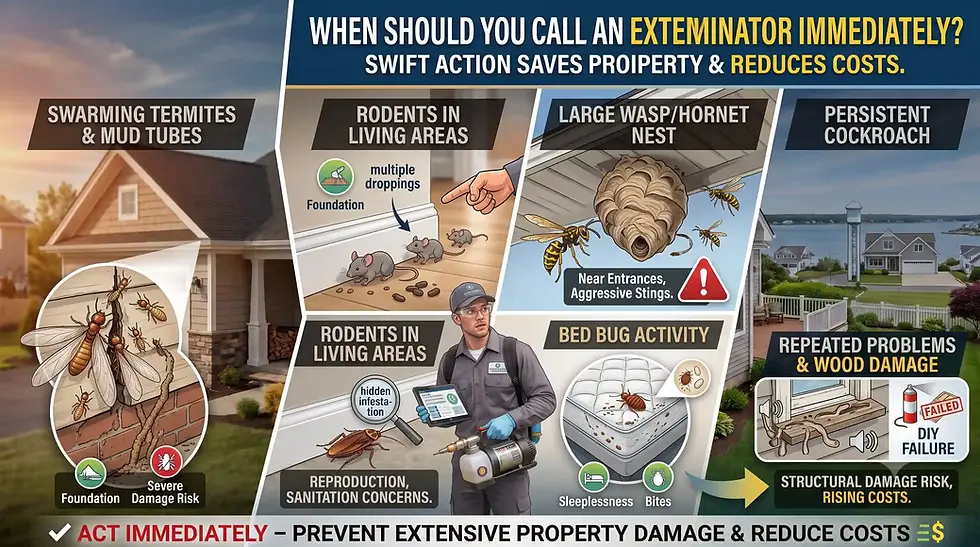
While some minor pest issues can be monitored, others require prompt professional attention.
Contact a pest control professional if you notice:
Swarming termites around your home
Mud tubes on foundation walls
Rodents inside living areas
Large wasp or hornet nests near entrances
Persistent cockroach sightings
Multiple mice or rat droppings
Bed bug activity
Unexplained wood damage
Repeated pest problems despite DIY treatments
Acting early often prevents more extensive property damage and reduces treatment costs.
Frequently Asked Questions
How much does pest control cost in Toms River, NJ?
Pricing depends on several factors, including the type of pest, the severity of the infestation, your property's size, and whether ongoing maintenance is needed. A professional inspection is the best way to receive an accurate estimate tailored to your situation.
How often should my home receive pest control treatments?
For many homeowners, quarterly treatments provide reliable year-round protection.
Homes with recurring infestations, nearby wooded areas, or specific pest concerns may benefit from more frequent service.
Are professional pest control treatments safe for children and
pets?
Modern pest control methods are designed with safety in mind when applied according to product labels and industry standards. Your technician should explain any precautions to follow before, during, and after treatment.
What's the difference between pest control and extermination?
Extermination typically focuses on eliminating an existing infestation. Pest control is a broader, long-term approach that includes prevention, monitoring, exclusion, and ongoing management to reduce the likelihood of future infestations.
Can I prevent pests without using chemicals?
Many preventive measures don't involve pesticides. Sealing entry points, maintaining a clean home, reducing moisture, storing food properly, and managing landscaping can significantly reduce pest activity. However, established infestations may still require professional treatment.
What pests are most common in Ocean County?
Homeowners commonly encounter ants, termites, rodents, mosquitoes, ticks, cockroaches, spiders, and stinging insects. The types of pests you see often depend on the season and your property's surroundings.
How long does a typical pest treatment take?
Most residential treatments can be completed within one to two hours, though larger properties or more complex infestations may require additional time. Your technician can provide a more accurate estimate after inspecting your home.
Is year-round pest control worth it?
Yes. Preventive pest control helps detect issues early, reduces the risk of major infestations, and protects your home throughout changing seasons. Ongoing maintenance is often more cost-effective than addressing a severe infestation after it has spread.
Final Thoughts
Protecting your home from pests isn't about reacting after an infestation appears—it's about staying one step ahead. By understanding the pests most common in Toms River, recognizing the early warning signs, and following practical prevention strategies, you can reduce the risk of costly damage and enjoy greater peace of mind throughout the year.
While simple maintenance and good sanitation habits can go a long way, some pest problems require professional expertise to identify hidden activity, eliminate infestations at the source, and prevent them from returning. Taking action early is often the most effective—and most affordable—way to safeguard your home and family.
At Accurate Pest Control, we take pride in helping homeowners and businesses throughout Toms River and Ocean County protect their properties with customized, reliable pest management solutions. Whether you're dealing with termites, rodents, mosquitoes, ants, or another persistent pest, our experienced team is committed to delivering thorough inspections, effective treatments, and long-term prevention strategies tailored to your property's unique needs.
If you've noticed signs of pest activity or simply want the confidence that comes with a proactive inspection, we're here to help you keep your home comfortable, healthy, and pest-free all year long.


