What Causes Pest Infestations? Signs, Causes, and How to Prevent Them

A pest infestation usually doesn't start with dozens of bugs crawling across your kitchen floor.
It can start with one small crack.
A slow plumbing leak.
A cardboard box sitting untouched in the basement.
Or food crumbs that seem too insignificant to matter.
We often see homeowners assume that pests show up because a house isn't clean enough. That's not always the case. Pests are looking for the same basic things any living creature needs: food, water, shelter, warmth, and a way inside.
Once they find those conditions, your home can become much more than a temporary stop. It can become a place to feed, hide, nest, and reproduce.
That's why the best way to deal with a pest problem isn't simply to kill the pests you see.
It's to understand why they're there in the first place.
In this guide, we'll explain what causes pest infestations, what attracts common household pests, the warning signs homeowners often miss, why pests keep coming back, and when professional pest control makes sense.
What Causes a Pest Infestation?

At its simplest, a pest infestation develops when pests find favorable conditions and can remain there long enough to feed, hide, or reproduce.
The biggest factors we look for are:
Accessible food
Moisture and water
Shelter
Entry points
Suitable temperatures
Nesting areas
Outdoor conditions that support pest activity
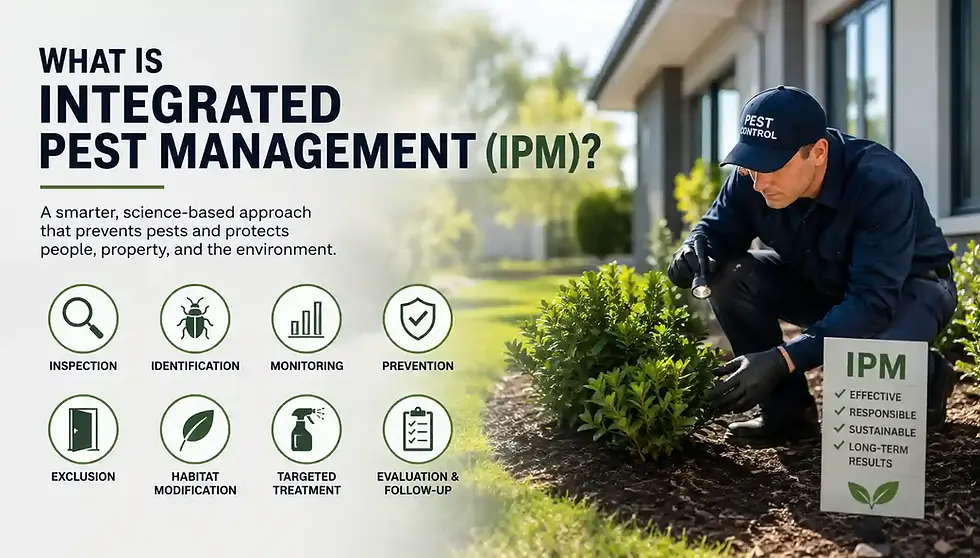
The EPA's current guidance on Integrated Pest Management (IPM) takes a similar approach. Instead of relying on routine pesticide applications, IPM emphasizes identifying the pest, monitoring activity, preventing access to food, water, and shelter, and then using appropriate control methods when needed.
That distinction matters.
The pest you see may be the symptom. The conditions around your home may be the reason the problem exists.
Food Gives Pests a Reason to Stay
An open bag of pet food, crumbs under an appliance, an overflowing trash can, or food left on the counter can provide enough opportunity for certain pests.
Ants, cockroaches, rodents, and flies are especially good at finding accessible food.
And you don't need a messy kitchen for this to happen.
Even well-maintained homes can have small food sources that pests exploit.
The CDC recommends storing food in airtight containers, cleaning crumbs and spills promptly, keeping trash closed, and reducing food and water sources when managing household pests.
Moisture Can Create a Pest-Friendly Environment
Water is another major factor.
We pay close attention to:
Leaking pipes
Dripping faucets
Damp basements
Crawl-space moisture
Poor drainage
Condensation
Standing water
Wet areas around foundations
Moisture doesn't just attract insects directly. It can also create the conditions that make a property more favorable for nesting and survival.
Termites are a good example. Rutgers notes that subterranean termites are especially associated with moist wood and soil-to-wood conditions, and recommends correcting leaks, improving drainage, and reducing moisture around structures.
Shelter Gives Pests Somewhere to Hide
Pests don't want to spend all day exposed.
They look for protected spaces such as:
Wall voids
Basements
Attics
Crawl spaces
Garages
Cabinets
Storage areas
Insulation
Cluttered corners
This is one reason you can have a pest problem without seeing many pests.
What you see is not always the full size of the problem.
What Attracts Pests to Your Home?

If we had to simplify the problem, we'd use five words:
Food. Water. Shelter. Warmth. Access.
Remove enough of those conditions and your home becomes less attractive.
Leave several of them available, and pests have more reasons to stay.
1. Exposed Food
Common attractants include:
Crumbs
Spills
Leftovers
Pet food
Open pantry items
Fruit
Grease
Garbage
2. Water
Even small moisture sources can matter.
Check under sinks, around toilets, near appliances, in basements, and around exterior drainage.
3. Clutter
Boxes, paper, fabric, stored belongings, and unused materials can create hiding or nesting opportunities.
4. Landscaping
Shrubs, mulch, leaf litter, firewood, and vegetation close to the structure can provide shelter or create pathways toward the home.
5. Cracks and Gaps
A pest doesn't need a front door.
It can use a gap around a pipe, damaged screen, opening around a utility line, foundation crack, or space beneath a door.
Recent pest-prevention guidance continues to emphasize the same basic pattern: accessible food and water, clutter, vegetation, outdoor lighting, and unsealed openings can all contribute to pest activity around homes.
10 Common Causes of Pest Infestations
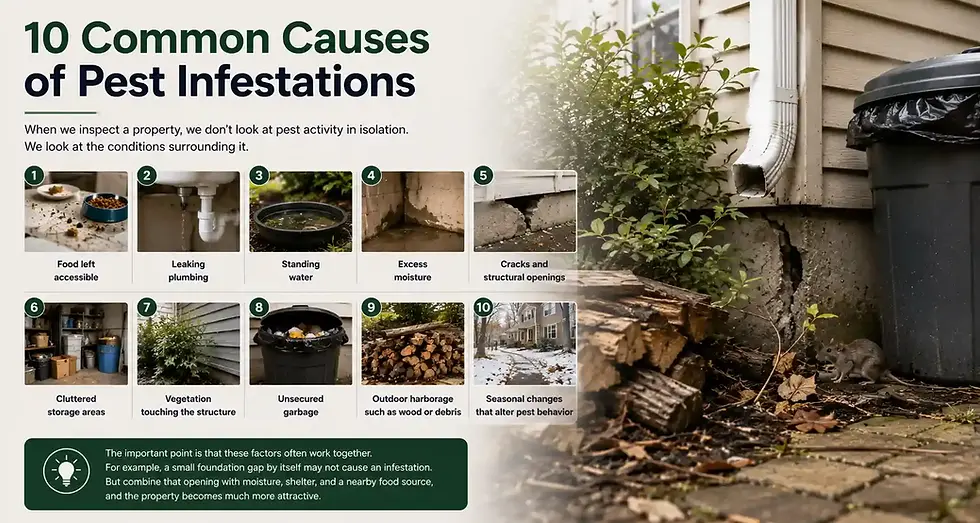
When we inspect a property, we don't look at pest activity in isolation. We look at the conditions surrounding it.
Here are ten of the most common contributors:
Food left accessible
Leaking plumbing
Standing water
Excess moisture
Cracks and structural openings
Cluttered storage areas
Vegetation touching the structure
Unsecured garbage
Outdoor harborage such as wood or debris
Seasonal changes that alter pest behavior
The important point is that these factors often work together.
For example, a small foundation gap by itself may not cause an infestation.
But combine that opening with moisture, shelter, and a nearby food source, and the property becomes much more attractive.
Why Do Pests Enter New Jersey Homes?
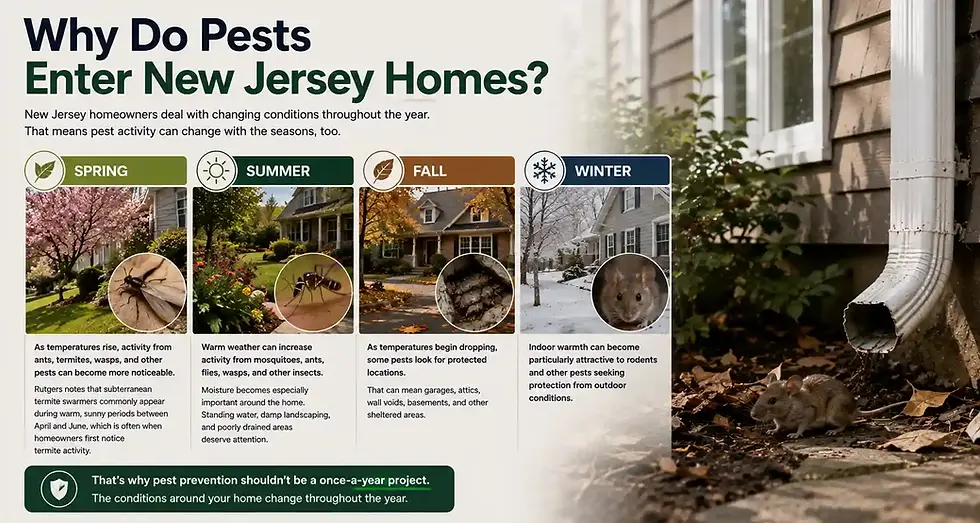
New Jersey homeowners deal with changing conditions throughout the year.
That means pest activity can change with the seasons, too.
Spring
As temperatures rise, activity from ants, termites, wasps, and other pests can become more noticeable.
Rutgers notes that subterranean termite swarmers commonly appear during warm, sunny periods between April and June, which is often when homeowners first notice termite activity.
Summer
Warm weather can increase activity from mosquitoes, ants, flies, wasps, and other insects.
Moisture becomes especially important around the home.
Standing water, damp landscaping, and poorly drained areas deserve attention.
Fall
As temperatures begin dropping, some pests look for protected locations.
That can mean garages, attics, wall voids, basements, and other sheltered areas.
Winter
Indoor warmth can become particularly attractive to rodents and other pests seeking protection from outdoor conditions.
That's why pest prevention shouldn't be a once-a-year project.
The conditions around your home change throughout the year.
Common Household Pests and What Attracts Them

Different pests have different needs.
That's why identifying the pest is so important.
Ants often follow accessible food and water sources.
A small trail across your kitchen counter may be more useful as a clue than as a nuisance. Follow where they're coming from and where they're going.
Cockroaches are attracted to food, moisture, warmth, and protected hiding areas.
Kitchens, bathrooms, utility spaces, and areas around plumbing can provide several of these conditions at once.
Rodents need food, water, shelter, and access.
They may enter through surprisingly small openings and hide inside walls, attics, basements, garages, or other protected areas.
Termites are different because the concern isn't simply nuisance activity.
Rutgers describes subterranean termites as particularly destructive structural pests and notes that termite control costs in the United States exceed $1.5 billion annually.
That's why termite evidence deserves more attention than an occasional nuisance insect.
Wasps and Hornets
These pests often take advantage of protected locations around rooflines, eaves, wall voids, sheds, and other sheltered areas.
Spiders can also tell us something about the property.
A large number of spiders may indicate that another insect population is providing them with a food source.
What Are the Early Signs of a Pest Infestation?
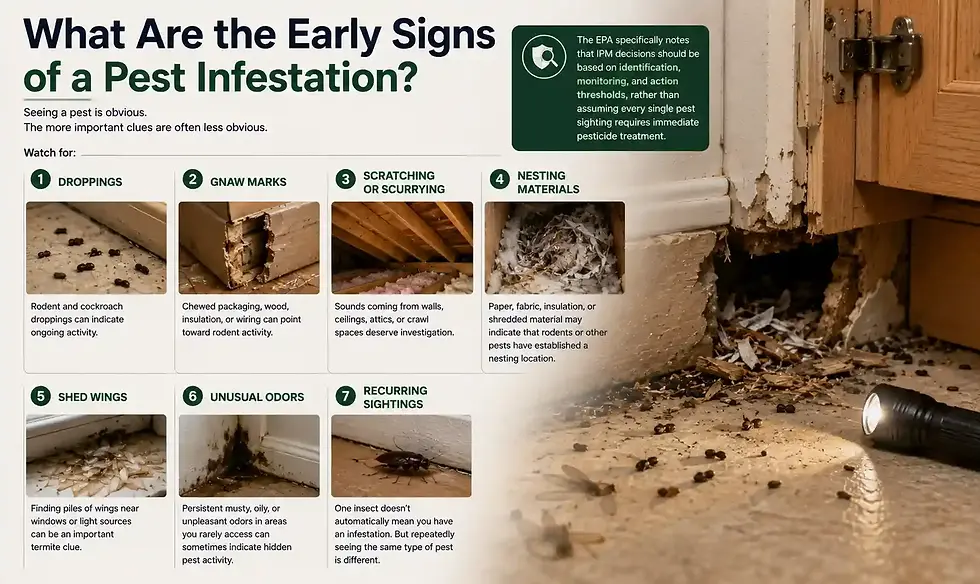
Seeing a pest is obvious.
The more important clues are often less obvious.
Watch for:
Droppings
Rodent and cockroach droppings can indicate ongoing activity.
Gnaw Marks
Chewed packaging, wood, insulation, or wiring can point toward rodent activity.
Scratching or Scurrying
Sounds coming from walls, ceilings, attics, or crawl spaces deserve investigation.
Nesting Materials
Paper, fabric, insulation, or shredded material may indicate that rodents or other pests have established a nesting location.
Shed Wings
Finding piles of wings near windows or light sources can be an important termite clue.
Unusual Odors
Persistent musty, oily, or unpleasant odors in areas you rarely access can sometimes indicate hidden pest activity.
Recurring Sightings
One insect doesn't automatically mean you have an infestation.
But repeatedly seeing the same type of pest is different.
The EPA specifically notes that IPM decisions should be based on identification, monitoring, and action thresholds, rather than assuming every single pest sighting requires immediate pesticide treatment.
Where Do Pests Hide Inside a Home?

If you only check visible areas, you can easily miss the source.
Kitchen
Look around:
Cabinets
Pantry shelves
Appliances
Sink plumbing
Baseboards
Trash areas
Basement
Pay attention to:
Moisture
Foundation cracks
Storage
Utility penetrations
Clutter
Attic
Inspect:
Insulation
Roofline openings
Stored boxes
Vents
Signs of nesting
Garage
Check:
Door gaps
Cardboard
Stored food
Clutter
Wood or outdoor materials
Exterior
Don't stop at the front door.
We also recommend looking around:
Foundation walls
Windows
Doors
Utility penetrations
Landscaping
Mulch
Wood piles
Drainage areas
Why Do Pests Keep Coming Back?

This is one of the most frustrating situations for homeowners.
You treat the visible pests.
They disappear.
Then a few weeks later, they're back.
Why?
Because the underlying problem may still exist.
The food source wasn't removed.
The moisture wasn't fixed.
The entry point wasn't sealed.
The nest or colony wasn't addressed.
Or the pest was misidentified.
This is why we don't believe effective pest control should begin and end with spraying.
The EPA's IPM approach focuses on identifying the pest, monitoring activity, preventing conditions that support it, and then selecting appropriate control methods.
If you don't address why pests can survive on the property, you're leaving the door open for recurrence.
Can a Clean Home Still Have a Pest Infestation?
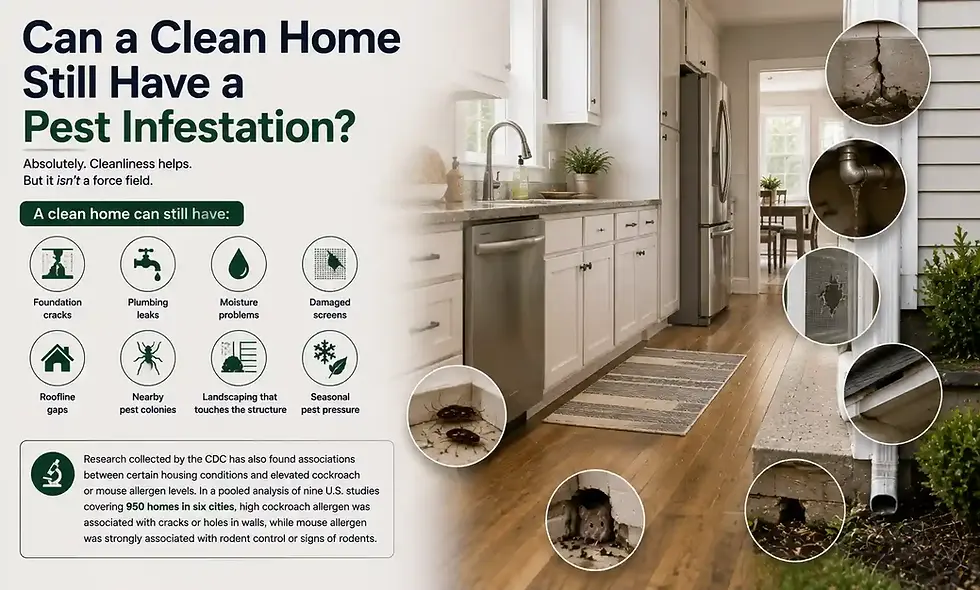
Absolutely.
Cleanliness helps.
But it isn't a force field.
A clean home can still have:
Foundation cracks
Plumbing leaks
Moisture problems
Damaged screens
Roofline gaps
Nearby pest colonies
Landscaping that touches the structure
Seasonal pest pressure
Research collected by the CDC has also found associations between certain housing conditions and elevated cockroach or mouse allergen levels. In a pooled analysis of nine U.S. studies covering 950 homes in six cities, high cockroach allergen was associated with cracks or holes in walls, while mouse allergen was strongly associated with rodent control or signs of rodents.
Are Pest Infestations Dangerous?
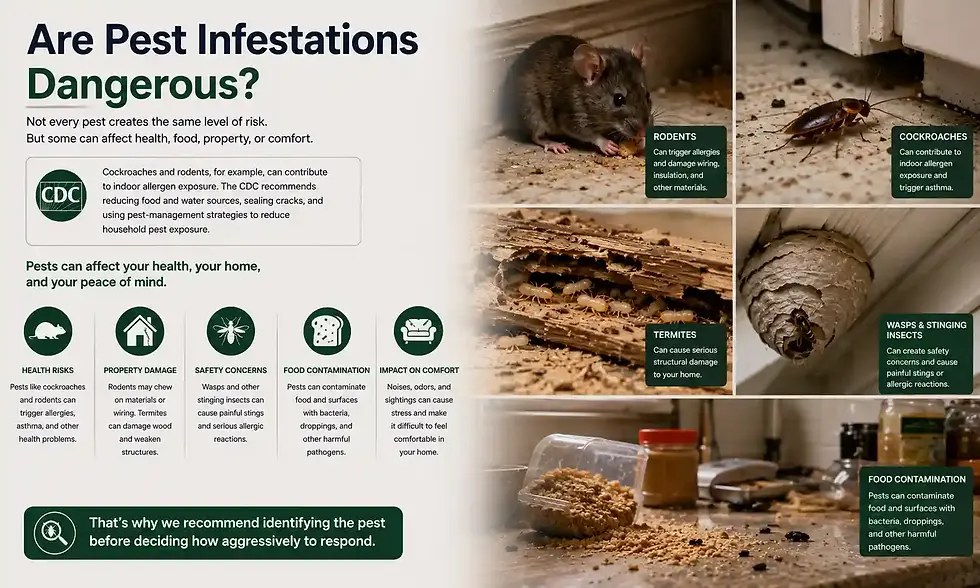
Not every pest creates the same level of risk.
But some can affect health, food, property, or comfort.
Cockroaches and rodents, for example, can contribute to indoor allergen exposure. The CDC recommends reducing food and water sources, sealing cracks, and using pest-management strategies to reduce household pest exposure.
Pests can also cause property problems.
Rodents may damage materials or wiring.
Termites can damage wood.
Wasps and other stinging insects can create safety concerns.
And some pests can contaminate food or living areas.
That's why we recommend identifying the pest before deciding how aggressively to respond.
What Can We Do to Prevent Pest Infestations?
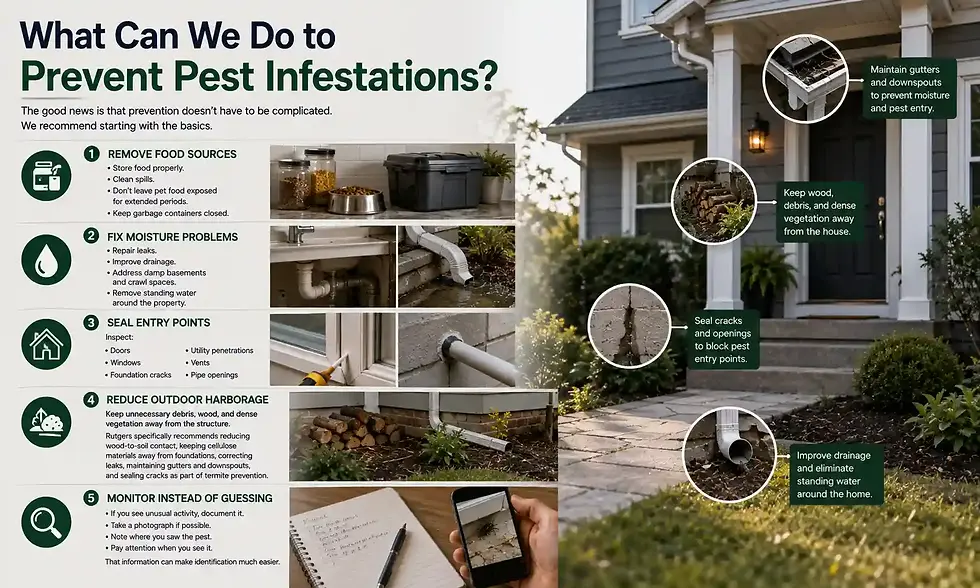
The good news is that prevention doesn't have to be complicated.
We recommend starting with the basics.
Remove Food Sources
Store food properly.
Clean spills.
Don't leave pet food exposed for extended periods.
Keep garbage containers closed.
Fix Moisture Problems
Repair leaks.
Improve drainage.
Address damp basements and crawl spaces.
Remove standing water around the property.
Seal Entry Points
Inspect:
Doors
Windows
Foundation cracks
Utility penetrations
Vents
Pipe openings
Reduce Outdoor Harborage
Keep unnecessary debris, wood, and dense vegetation away from the structure.
Rutgers specifically recommends reducing wood-to-soil contact, keeping cellulose materials away from foundations, correcting leaks, maintaining gutters and downspouts, and sealing cracks as part of termite prevention.
Monitor Instead of Guessing
If you see unusual activity, document it.
Take a photograph if possible.
Note where you saw the pest.
Pay attention when you see it.
That information can make identification much easier.
DIY Pest Control vs. Professional Pest Control
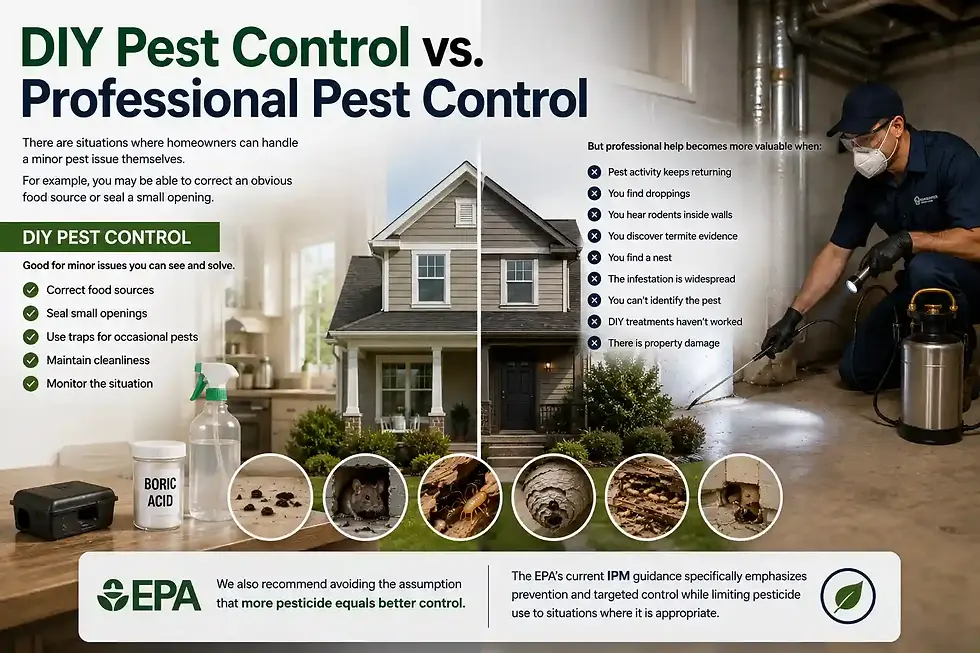
There are situations where homeowners can handle a minor pest issue themselves.
For example, you may be able to correct an obvious food source or seal a small opening.
But professional help becomes more valuable when:
Pest activity keeps returning
You find droppings
You hear rodents inside walls
You discover termite evidence
You find a nest
The infestation is widespread
You can't identify the pest
DIY treatments haven't worked
There is property damage
We also recommend avoiding the assumption that more pesticide equals better control.
The EPA's current IPM guidance specifically emphasizes prevention and targeted control while limiting pesticide use to situations where it is appropriate.
What Happens During a Professional Pest Inspection?

A good inspection should be about more than finding a bug.
We want to understand the property.
That means looking for:
What pest is present?
Where is it active?
How is it getting inside?
What is it eating?
Where is it getting water?
Where is it hiding?
Is there a nest or colony?
What conditions are encouraging the activity?
Has the problem caused damage?
What needs to change to reduce the chance of recurrence?
This is also why accurate identification matters.
The EPA says correct identification helps determine appropriate prevention measures and reduces unnecessary pesticide use.
A Better Way to Think About Pest Control
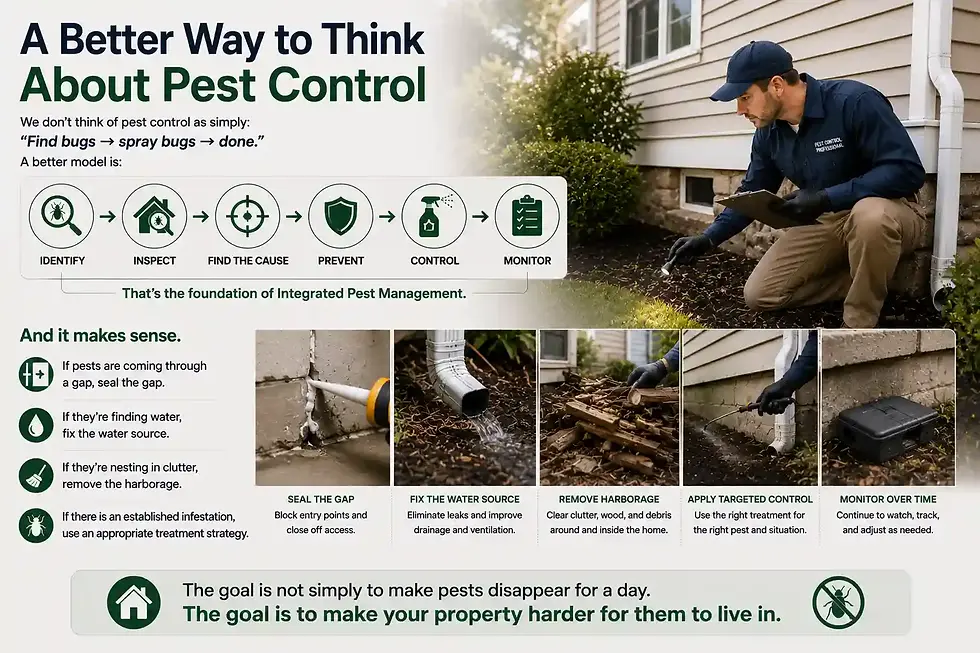
We don't think of pest control as simply:
"Find bugs → spray bugs → done."
A better model is:
Identify → Inspect → Find the Cause → Prevent → Control → Monitor
That's the foundation of Integrated Pest Management.
And it makes sense.
If pests are coming through a gap, seal the gap.
If they're finding water, fix the water source.
If they're nesting in clutter, remove the harborage.
If there is an established infestation, use an appropriate treatment strategy.
The goal is not simply to make pests disappear for a day.
The goal is to make your property harder for them to live in.
When Should You Call a Pest Control Professional?

We recommend getting professional help when pest activity becomes recurring, widespread, difficult to identify, or difficult to reach.
Don't ignore:
Repeated pest sightings
Rodent droppings
Scratching sounds
Termite swarmers
Shed termite wings
Nesting activity
Structural damage
Persistent cockroach activity
Recurring infestations after DIY treatment
Some pest problems are much easier to solve when they're addressed early.
Rutgers, for example, recommends professional termite inspections because homeowners can have difficulty distinguishing active termite activity from old damage, especially when obvious mud tubes aren't present.
How We Can Prevent Pest Problems From Coming Back

Our goal isn't just to remove what you can see.
We want to understand what allowed the pest problem to develop.
That means looking at the property as a whole.
Food. Water. Shelter. Entry points. Moisture. Landscaping. Pest activity.
Once those pieces make sense, the solution becomes much clearer.
That's also why routine monitoring can be more useful than waiting until an infestation becomes obvious.
Frequently Asked Questions About Pest Infestations
What is the most common cause of pest infestations?
There isn't one universal cause. Most infestations develop because pests have reliable access to some combination of food, water, shelter, suitable temperatures, and entry points.
What attracts pests to a house?
Common attractants include exposed food, garbage, moisture, standing water, clutter, shelter, landscaping, and openings around the structure.
Can a clean house have pests?
Yes. Cleanliness can remove some food sources, but it doesn't eliminate structural gaps, moisture problems, seasonal pest movement, or nearby colonies.
How do I know if I have a pest infestation?
Look for repeated sightings, droppings, gnaw marks, nesting material, unusual odors, shed wings, property damage, or recurring activity.
Why do pests keep coming back after treatment?
The underlying source may still be present. An entry point, moisture problem, food source, nest, colony, or other favorable condition may need to be addressed.
What attracts mice into a home?
Mice are looking for food, water, warmth, shelter, and protected nesting locations. Small openings around the structure can provide access.
What attracts cockroaches?
Cockroaches are commonly associated with accessible food, moisture, warmth, and protected hiding spaces.
Does seeing one pest mean I have an infestation?
Not necessarily. A single pest sighting doesn't automatically mean an infestation. However, certain pests and signs—such as termites, bed bugs, or rodents—deserve closer attention.
How can I prevent pests from coming back?
Reduce food and water sources, fix moisture problems, seal entry points, reduce outdoor harborage, maintain the property, and monitor for recurring activity.
When should I hire professional pest control?
Consider professional help when activity keeps returning, the pest is difficult to identify, there are signs of an established infestation, property damage is present, or DIY measures haven't solved the problem.
The Bottom Line
Pests don't invade homes for no reason.
They're responding to opportunities.
A little food.
A little moisture.
A protected hiding place.
An opening around a pipe.
A crack in the foundation.
Sometimes, several of these conditions come together without the homeowner realizing it.
That's why we believe effective pest control starts with finding the reason pests are there, not simply treating what happens to be visible.
At Accurate Pest Control, we take that same approach when addressing pest problems. We look beyond the immediate sighting to understand the conditions contributing to the activity, identify the pest, and determine the most appropriate way to control the problem and reduce the chance of it returning.
Because the best pest control isn't just about getting pests out.
It's about making your home a place they don't want to come back to.