


Integrated Pest Management: A Smarter, Safer Way to Keep New Jersey Homes Pest-Free

If you've ever dealt with ants marching across your kitchen, mice sneaking into your basement, or mosquitoes taking over your backyard, you're not alone. Pest problems are a reality for many New Jersey homeowners. The state's changing seasons, humid summers, wooded neighborhoods, and older homes create ideal conditions for many types of pests.
When pests appear, many people reach for a can of spray or a store-bought trap, hoping the problem will disappear overnight. While these products may provide temporary relief, they often fail to address the root cause of the infestation. That's why the same pests frequently return weeks or months later.
We've seen this happen countless times. Homeowners spend time and money treating visible pests, only to discover the infestation has been growing behind walls, under floors, or around the foundation all along.
That's where Integrated Pest Management (IPM) makes a difference.
Rather than relying on routine pesticide applications, IPM takes a smarter, long-term approach. It focuses on understanding why pests are entering your property, identifying the conditions that attract them, and using a combination of prevention, monitoring, exclusion, and targeted treatments to solve the problem at its source.
The goal isn't simply to eliminate pests today. It's to make your home less inviting to them tomorrow.
In this guide, we'll explain how Integrated Pest Management works, why it's become the preferred approach for many pest professionals, and how it can help protect your New Jersey home throughout the year.
What Is Integrated Pest Management (IPM)?
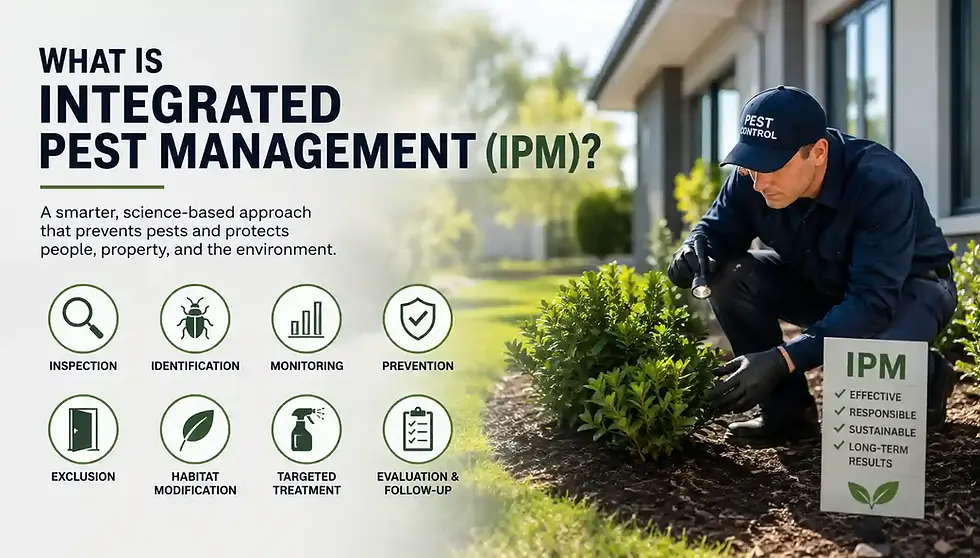
Integrated Pest Management, commonly called IPM, is a science-based strategy for preventing and managing pest problems while minimizing unnecessary pesticide use.
Instead of asking, "How do we kill these pests?" IPM starts with a different question:
"Why are these pests here in the first place?"
That simple shift in thinking changes everything.
Rather than treating only the symptoms of an infestation, IPM focuses on identifying and eliminating the conditions that allow pests to thrive. This preventive approach often leads to more effective, longer-lasting results than relying on pesticides alone.
Today, IPM is widely used in homes, schools, healthcare facilities, commercial buildings, food processing plants, and agricultural settings because it balances effective pest control with responsible environmental practices.
At its core, Integrated Pest Management combines several proven strategies, including:
Thorough inspections
Accurate pest identification
Ongoing monitoring
Preventive maintenance
Exclusion techniques
Habitat modification
Targeted treatments when necessary
Continuous evaluation and follow-up
Each step works together to create a customized solution rather than relying on a one-size-fits-all treatment plan.
The Five Core Principles of Integrated Pest Management

Successful IPM programs are built around five essential principles.
1. Prevention Comes First
The most effective way to control pests is to stop them from becoming a problem in the first place.
We often recommend homeowners focus on simple preventive measures, such as:
Sealing cracks around doors and windows
Repairing plumbing leaks
Keeping food properly stored
Reducing moisture around the home
Maintaining landscaping
Removing clutter where pests may hide
These small improvements can dramatically reduce the likelihood of future infestations.
2. Proper Pest Identification
Not every insect or rodent requires the same solution.
For example, carpenter ants and termites both damage wood, but they behave very differently. Applying the wrong treatment can waste time, money, and allow the infestation to grow.
Proper identification helps determine:
The pest species
Its nesting habits
Food sources
Entry points
Reproductive cycle
Most effective treatment methods
This is one reason professional inspections are so valuable. Treating the wrong pest often leads to recurring infestations.
3. Continuous Monitoring
IPM doesn't rely on guesswork.
Instead, pest activity is monitored over time using inspections and specialized tools.
These may include:
Sticky monitoring traps
Rodent bait stations
Digital monitoring devices
Exterior inspections
Moisture meters
Seasonal evaluations
Monitoring allows pest professionals to detect activity early before a small issue becomes a major infestation.
4. Targeted Action
One of the biggest differences between traditional pest control and IPM is that action is taken only when necessary.
Instead of automatically applying pesticides on a routine schedule, pest professionals evaluate:
Pest populations
Health risks
Property damage
Likelihood of continued infestation
If treatment is needed, the least disruptive and most effective solution is selected first.
5. Ongoing Evaluation
Pest management isn't a one-time event.
Conditions change throughout the year.
New weather patterns, landscaping changes, renovations, and seasonal pest activity can all influence future infestations.
That's why successful IPM programs include routine follow-up inspections and adjustments as needed.
Why Traditional Pest Control Isn't Always Enough

For decades, pest control was often viewed as a reactive service.
Homeowners noticed pests.
A technician arrived.
The pests were sprayed.
Problem solved.
Or so it seemed.
While chemical treatments remain an important tool, they don't always solve the underlying problem.
Imagine noticing ants in your kitchen every spring.
You spray the visible trail.
The ants disappear.
A month later, they're back.
Why?
Because the colony was never addressed, and the conditions attracting them—such as moisture, food crumbs, or tiny entry points—were never corrected.
The same pattern occurs with many common household pests, including rodents, cockroaches, spiders, and wasps.
We've found that recurring infestations often have little to do with the effectiveness of a product and much more to do with unresolved environmental conditions.
Some common issues include:
Unsealed foundation gaps
Standing water
Damaged weather stripping
Food left accessible
Dense vegetation touching the home
Excess moisture in crawl spaces
Poor sanitation around garbage storage
Without addressing these factors, even effective treatments may provide only temporary relief.
Another growing concern is pesticide resistance.
Some pest populations have developed reduced sensitivity to certain products after repeated exposure. While resistance varies by species and product, it reinforces why relying solely on chemical treatments is no longer considered the best long-term strategy.
Integrated Pest Management helps reduce this risk by combining multiple control methods instead of depending on a single solution.
How Integrated Pest Management Works: Step by Step

One of the biggest misconceptions about IPM is that it's simply another pest control treatment.
In reality, it's an ongoing process designed to deliver lasting results.
Here's what a typical Integrated Pest Management program looks like.
Step 1: Comprehensive Property Inspection
Every successful IPM program begins with a thorough inspection.
Rather than focusing only on where pests have been seen, we inspect the entire property to uncover the conditions contributing to pest activity.
This may include examining:
Kitchens
Bathrooms
Basements
Crawl spaces
Attics
Garages
Utility rooms
Exterior walls
Rooflines
Landscaping
Foundation gaps
Plumbing penetrations
Window and door seals
During this stage, we're looking for much more than live pests.
We also search for:
Droppings
Nesting materials
Moisture issues
Structural damage
Entry points
Food sources
Shelter opportunities
These findings help us understand not only what pests are present, but why they're there.
A thorough inspection creates the foundation for every recommendation that follows.
Step 2: Accurate Pest Identification
Once signs of activity are discovered, the next step is identifying the pest correctly.
This is more important than many homeowners realize.
For example:
Ants require a very different treatment strategy than termites.
Roof rats behave differently from house mice.
Paper wasps and yellow jackets build different types of nests.
German cockroaches reproduce much faster than many other cockroach species.
Each pest has unique behaviors, nesting habits, food preferences, and seasonal activity patterns.
Without proper identification, even well-intentioned treatments may miss the source of the problem.
By understanding the biology of the pest, we can choose the most effective control methods while minimizing unnecessary treatments.
Step 3: Monitor Pest Activity
Finding one or two pests doesn't always mean you have a full-blown infestation. That's why monitoring is such an important part of Integrated Pest Management.
Instead of making assumptions, we gather information over time to understand how active the pests are, where they're coming from, and whether the problem is growing or staying the same.
Monitoring helps us answer questions like:
Are the pests isolated to one area or spread throughout the property?
Is the infestation active or leftover from a previous issue?
Are new pests entering the home?
Which areas are most vulnerable?
Depending on the pest and the property, monitoring may include:
Sticky traps for crawling insects
Rodent monitoring stations
Exterior bait stations
Moisture inspections
Visual inspections during follow-up visits
Digital monitoring devices for commercial properties
Rather than relying on guesswork, these tools provide valuable data that helps us make informed decisions.
For homeowners, monitoring also offers peace of mind. It allows us to detect problems early, often before they become expensive or difficult to control.
Step 4: Determine When Action Is Necessary
One of the principles that sets IPM apart is the concept of action thresholds.
Simply put, not every pest sighting requires immediate treatment.
For example, spotting a single spider in your garage doesn't necessarily indicate a serious infestation. On the other hand, finding termite mud tubes, rodent droppings, or multiple cockroaches during the day often signals a larger problem that needs prompt attention.
Before recommending treatment, we consider several factors, including:
The type of pest
The number of pests observed
Potential health risks
Risk of property damage
Whether the population is increasing
The likelihood of pests spreading to other areas
This thoughtful approach helps avoid unnecessary pesticide applications while ensuring serious infestations receive the attention they require.
Step 5: Eliminate the Conditions That Attract Pests
One of the biggest reasons pest problems return is that the conditions attracting them were never addressed.
Think of your home from a pest's perspective. If it offers food, water, and shelter, pests have every reason to stay.
That's why prevention is at the heart of every successful IPM program.
Improve Sanitation
Food crumbs, grease buildup, overflowing trash, and uncovered pet food can attract a variety of pests, including ants, cockroaches, rodents, and flies.
Simple habits make a big difference:
Wipe down countertops daily.
Sweep and vacuum regularly.
Store dry goods in airtight containers.
Clean under appliances where crumbs collect.
Empty indoor trash frequently.
These steps remove food sources that pests depend on.
Control Moisture
Many pests thrive in damp environments.
Cockroaches, termites, mosquitoes, silverfish, and rodents are often drawn to areas with excess moisture.
We recommend:
Repairing leaking pipes.
Cleaning gutters regularly.
Improving crawl space ventilation.
Fixing roof leaks.
Eliminating standing water around the property.
Reducing moisture not only discourages pests but also helps protect your home's structural integrity.
Manage Landscaping
Your yard plays a bigger role in pest prevention than many homeowners realize.
Overgrown shrubs, tree branches touching the roof, piles of leaves, and stacked firewood can all provide shelter for insects and rodents.
To reduce pest pressure:
Trim vegetation away from the home.
Keep mulch several inches from the foundation.
Store firewood off the ground and away from exterior walls.
Remove yard debris promptly.
These simple changes create fewer hiding places and reduce easy access to your home.
Step 6: Block Pest Entry Points Through Exclusion
Even the cleanest home can develop a pest problem if pests have easy ways to get inside.
Exclusion focuses on physically preventing pests from entering the property in the first place.
During inspections, we often find surprisingly small openings that homeowners didn't realize existed.
Common entry points include:
Gaps around utility lines
Cracks in the foundation
Damaged door sweeps
Torn window screens
Open attic vents
Roofline gaps
Spaces around plumbing penetrations
Unsealed crawl space vents
Rodents, in particular, can squeeze through incredibly small openings. Mice can fit through gaps roughly the size of a dime, making even tiny cracks worth addressing.
Practical exclusion measures include:
Installing weather stripping.
Sealing cracks with appropriate materials.
Repairing damaged screens.
Adding door sweeps.
Installing chimney caps.
Screening foundation vents.
By limiting access, you significantly reduce the chances of pests establishing themselves indoors.
Step 7: Use Targeted Treatments Only When Needed
Despite what some people believe, Integrated Pest Management does not eliminate pesticide use entirely.
Instead, it emphasizes using the right treatment, in the right place, at the right time.
Once inspections, monitoring, and preventive measures have been completed, targeted treatments may still be necessary for active infestations.
Depending on the situation, these treatments may include:
Precision baiting systems
Crack-and-crevice applications
Insect growth regulators (IGRs)
Dust formulations for hidden voids
Rodent bait stations
Nest removal
Biological controls where appropriate
Because these treatments are targeted rather than broad, they can often achieve effective results while reducing unnecessary product use.
This balanced approach helps protect both the property and the surrounding environment.
The Four Types of Pest Control Used in Integrated Pest Management

Much too many homeowners assume pest control means spraying chemicals. In reality, IPM combines several methods that work together to deliver longer-lasting results.
By using multiple strategies instead of relying on just one, we can often solve pest problems more effectively while minimizing unnecessary treatments.
Let's take a closer look at the four primary control methods used in Integrated Pest Management.
Biological Control
Biological control uses natural predators, parasites, or microorganisms to help keep pest populations under control.
While this approach is commonly associated with agriculture, landscaping, and commercial properties, it can also play a role in certain residential situations.
Examples include:
Beneficial insects that feed on garden pests.
Naturally occurring bacteria that target mosquito larvae.
Predatory insects that help reduce aphid populations.
Because biological controls work with nature instead of against it, they can be an effective long-term solution in the right environment.
Mechanical and Physical Control
Mechanical control focuses on physically removing pests or preventing them from accessing your property.
Many of these techniques are straightforward, highly effective, and require little or no pesticide use.
Common examples include:
Snap traps for rodents.
Sticky traps for crawling insects.
Vacuum removal of visible pests.
Sealing entry points.
Installing door sweeps.
Window and vent screens.
Removing nests when appropriate.
Mechanical controls are often one of the first recommendations we make because they address pest activity immediately while supporting long-term prevention.
Cultural Control
Cultural control refers to changing the environment so it becomes less attractive to pests.
In residential settings, this often involves improving everyday maintenance habits.
Examples include:
Keeping kitchens clean.
Storing food properly.
Reducing clutter.
Repairing plumbing leaks.
Improving drainage.
Trimming vegetation.
Removing standing water.
Maintaining proper waste management.
These preventive practices form the foundation of every successful IPM program.
The cleaner and less inviting your property is, the fewer opportunities pests have to settle in.
Chemical Control
Chemical control is still an important part of Integrated Pest Management—but it's used strategically rather than routinely.
When pesticides are necessary, professionals choose products and application methods based on:
The pest species.
The severity of the infestation.
The location of pest activity.
Safety considerations.
Environmental impact.
Rather than applying treatments throughout an entire property, IPM favors targeted applications where pests are actively hiding or traveling.
This approach often improves effectiveness while minimizing unnecessary exposure.
Why This Multi-Layered Approach Works

No single pest control method can solve every infestation.
For example:
Sealing entry points without removing food sources may still attract pests.
Applying pesticides without fixing moisture problems often leads to repeat infestations.
Cleaning alone won't eliminate an established termite colony.
Integrated Pest Management succeeds because it combines prevention, monitoring, exclusion, habitat modification, and targeted treatment into one comprehensive strategy.
Instead of asking homeowners to rely on a single product, it creates multiple layers of protection that make the property far less attractive to pests over time.
As a result, homeowners are more likely to experience long-lasting pest control rather than temporary relief.
Common New Jersey Pests That Benefit Most from Integrated Pest Management

New Jersey's climate creates the perfect environment for many household pests. Warm, humid summers encourage insects to breed rapidly, while colder months drive rodents and other pests indoors in search of warmth and food.
That's why we believe prevention should be a year-round effort—not just something you think about after spotting pests.
Below are some of the most common pests we encounter and how Integrated Pest Management helps control them.
Ants are one of the most frequent household pests in New Jersey. While seeing a few ants on your countertop may seem like a minor issue, they're often only a small part of a much larger colony hidden outdoors or inside walls.
Instead of simply spraying the visible trail, IPM focuses on:
Identifying the ant species
Locating entry points
Eliminating food and moisture sources
Using targeted bait systems when necessary
Sealing cracks around foundations, doors, and windows
By addressing the colony and the conditions attracting ants, homeowners are less likely to experience recurring infestations.
Cockroaches are more than just an unpleasant sight. They can contaminate food, spread bacteria, and contribute to allergy and asthma symptoms, especially in children.
Because cockroaches reproduce quickly and hide in hard-to-reach areas, simply spraying them rarely solves the problem.
An IPM strategy typically includes:
Thorough inspections
Improved sanitation
Moisture control
Monitoring traps
Crack-and-crevice treatments
Insect growth regulators (IGRs) when appropriate
This combination targets both the current infestation and future generations.
Mice and rats become especially active during the fall and winter as temperatures drop.
Unfortunately, rodents can cause much more than nuisance problems. They may chew electrical wiring, contaminate food, damage insulation, and spread disease.
Instead of relying solely on traps, IPM emphasizes:
Finding entry points
Sealing gaps
Removing food sources
Installing monitoring stations
Targeted trapping programs
Ongoing inspections
Preventing rodents from entering the home is often more effective than continually removing them after they've settled in.
Termites often remain hidden for months—or even years—before homeowners notice signs of damage.
Because they work quietly behind walls and beneath floors, early detection is critical.
Integrated Pest Management helps by:
Conducting routine inspections
Identifying moisture problems
Monitoring termite activity
Reducing wood-to-soil contact
Addressing structural vulnerabilities
Recommending targeted treatments when necessary
This proactive approach helps reduce the risk of costly structural repairs.
Mosquitoes aren't just annoying—they can also carry diseases that affect both people and pets.
Rather than relying exclusively on yard sprays, IPM focuses on reducing mosquito breeding sites by:
Eliminating standing water
Cleaning gutters
Maintaining proper drainage
Managing dense vegetation
Using targeted larvicides when needed
Because mosquitoes need water to reproduce, removing breeding areas is one of the most effective long-term solutions.
Ticks are a growing concern throughout New Jersey, particularly in wooded and suburban neighborhoods.
IPM strategies include:
Keeping grass trimmed
Creating mulch or gravel barriers between lawns and wooded areas
Reducing brush piles
Managing wildlife activity
Targeted treatments when tick populations become established
These preventive measures can significantly reduce tick exposure around the home.
Why New Jersey Homes Face Unique Pest Challenges

Every state has its own pest concerns, but New Jersey presents a unique combination of environmental conditions that make year-round pest prevention especially important.
Several factors contribute to increased pest activity:
Four distinct seasons that influence pest behavior
High humidity during warmer months
Older homes with aging foundations and utility penetrations
Dense suburban neighborhoods where pests easily move between properties
Wooded areas that provide shelter for rodents, ticks, and wildlife
Basements and crawl spaces that retain moisture
Coastal communities that experience additional moisture-related pest issues
We've found that homeowners who understand these local challenges are better prepared to prevent infestations before they become serious problems.
Benefits of Integrated Pest Management

Integrated Pest Management isn't just about reducing pest populations. It offers several long-term benefits that protect both your property and your family.
Long-Term Pest Prevention
Traditional treatments often focus on today's infestation.
IPM focuses on preventing the next one.
By addressing the underlying causes of pest activity, homeowners often experience fewer recurring problems over time.
Reduced Reliance on Pesticides
One of the biggest advantages of IPM is that pesticides become one tool among many—not the only solution.
Preventive maintenance, monitoring, and exclusion frequently reduce the need for repeated chemical applications.
Better Protection for Children and Pets
Families naturally want effective pest control while minimizing unnecessary exposure to pesticides.
Because IPM emphasizes prevention and targeted treatments, it can help reduce unnecessary applications while maintaining effective pest management.
Protects Your Home
Some pests do more than create inconvenience.
Rodents can damage electrical wiring.
Termites weaken structural wood.
Carpenter ants tunnel through damp wood.
Moisture-loving pests often signal hidden water problems.
Early intervention helps prevent small issues from becoming expensive repairs.
Can Save Money Over Time
While prevention requires ongoing attention, it often costs less than repairing significant pest damage or treating severe infestations.
Routine inspections and maintenance frequently identify problems before they become costly emergencies.
Integrated Pest Management vs. Traditional Pest Control
Many homeowners wonder whether IPM is simply another name for pest control.
The answer is no.
Although both approaches aim to eliminate pests, their methods differ significantly.
Traditional Pest Control | Integrated Pest Management |
Focuses primarily on eliminating existing pests | Focuses on preventing infestations before they begin |
Often relies heavily on pesticides | Uses prevention, monitoring, exclusion, and targeted treatments |
Reactive approach | Proactive approach |
May require repeated treatments | Designed for long-term management |
Limited focus on environmental conditions | Addresses food, water, shelter, and entry points |
Solves immediate problems | Reduces future pest pressure |
In our experience, homeowners who combine routine inspections with preventive maintenance generally enjoy more consistent, long-term results.
Common Mistakes That Make Pest Problems Worse
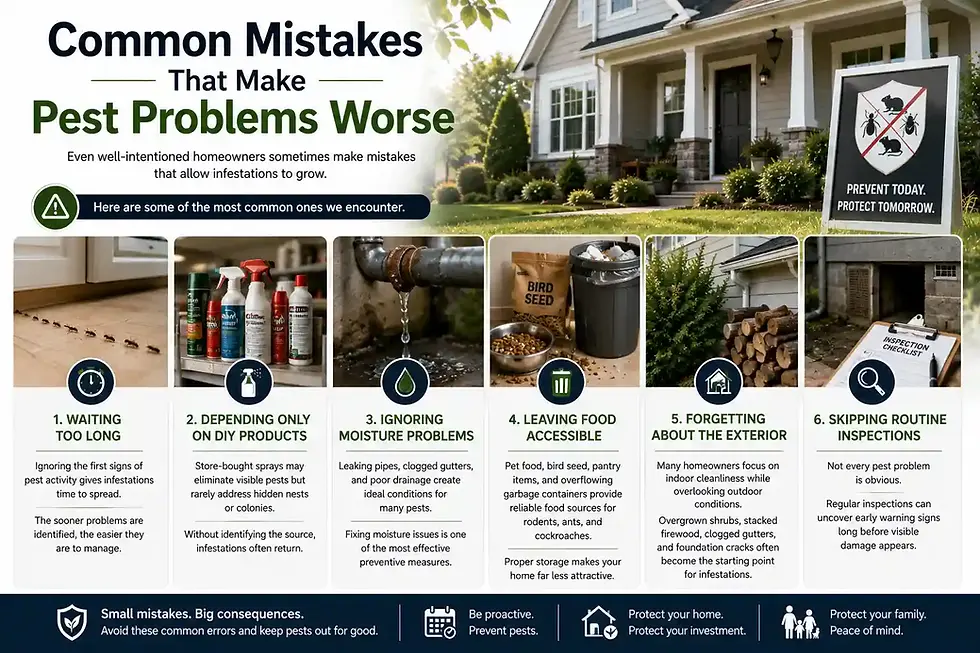
Even well-intentioned homeowners sometimes make mistakes that allow infestations to grow.
Here are some of the most common ones we encounter.
Waiting Too Long
Ignoring the first signs of pest activity gives infestations time to spread.
The sooner problems are identified, the easier they are to manage.
Depending Only on DIY Products
Store-bought sprays may eliminate visible pests but rarely address hidden nests or colonies.
Without identifying the source, infestations often return.
Ignoring Moisture Problems
Leaking pipes, clogged gutters, and poor drainage create ideal conditions for many pests.
Fixing moisture issues is one of the most effective preventive measures.
Leaving Food Accessible
Pet food, bird seed, pantry items, and overflowing garbage containers provide reliable food sources for rodents, ants, and cockroaches.
Proper storage makes your home far less attractive.
Forgetting About the Exterior
Many homeowners focus on indoor cleanliness while overlooking outdoor conditions.
Overgrown shrubs, stacked firewood, clogged gutters, and foundation cracks often become the starting point for infestations.
Skipping Routine Inspections
Not every pest problem is obvious.
Regular inspections can uncover early warning signs long before visible damage appears.
Seasonal Integrated Pest Management Checklist

Pest activity changes throughout the year, which means your prevention efforts should change too.
Spring
As temperatures rise, many pests become active after the winter months.
Spring Checklist
Inspect your home's exterior for new cracks or gaps.
Repair damaged window screens.
Clean gutters and downspouts.
Remove standing water from your yard.
Schedule a professional pest inspection before peak pest season begins.
Summer
Warm weather creates ideal breeding conditions for mosquitoes, ants, flies, wasps, and many other insects.
Summer Checklist
Keep grass trimmed.
Store garbage in tightly sealed containers.
Eliminate standing water around the property.
Trim shrubs away from the home.
Monitor for signs of ant or wasp activity.
Fall
As temperatures cool, rodents and other pests begin searching for indoor shelter.
Fall Checklist
Seal foundation cracks.
Install door sweeps.
Store firewood away from the home.
Inspect attic vents.
Remove fallen leaves and yard debris.
Winter
Many pests remain active indoors throughout winter.
Winter Checklist
Inspect basements and crawl spaces.
Monitor for rodent activity.
Keep food stored securely.
Repair plumbing leaks promptly.
Schedule follow-up inspections if you've experienced previous infestations.
Frequently Asked Questions
What is Integrated Pest Management (IPM)?
Integrated Pest Management (IPM) is a comprehensive approach to pest control that combines prevention, monitoring, accurate pest identification, exclusion, and targeted treatments to manage pests effectively while reducing unnecessary pesticide use.
How is IPM different from traditional pest control?
Traditional pest control often focuses on eliminating pests after they appear. IPM emphasizes preventing infestations by addressing the conditions that attract pests and using treatments only when necessary.
Is Integrated Pest Management safe for children and pets?
When implemented correctly, IPM prioritizes prevention and targeted applications, helping reduce unnecessary pesticide exposure while maintaining effective pest control. Professional treatments should always follow product label instructions and applicable regulations.
Does IPM eliminate the need for pesticides?
No. Pesticides can still play an important role, but they are used strategically after preventive and non-chemical methods have been considered.
Which pests can be managed with IPM?
IPM is effective for many common New Jersey pests, including ants, cockroaches, rodents, termites, mosquitoes, ticks, spiders, wasps, and more.
How often should my home be inspected?
Most homes benefit from an annual inspection, while properties with a history of pest problems or higher risk factors may require seasonal or more frequent evaluations.
Can homeowners practice Integrated Pest Management themselves?
Yes. Good sanitation, moisture control, proper food storage, sealing entry points, and regular property inspections are all important parts of homeowner-led IPM. For established infestations, professional assistance is often the most effective option.
Does IPM help prevent future infestations?
Yes. One of the primary goals of Integrated Pest Management is to reduce the likelihood of recurring pest problems by addressing the root causes of infestations rather than only treating visible pests.
Final Thoughts
Integrated Pest Management isn't about eliminating every insect with the strongest pesticide available. It's about understanding why pests invade, removing the conditions that attract them, and using the most effective solutions only when they're truly needed.
By combining inspections, monitoring, prevention, exclusion, and targeted treatments, IPM provides a practical, science-based strategy that helps reduce recurring infestations while protecting your home, your family, and the environment.
Whether you're dealing with ants in the kitchen, rodents in the attic, termites around the foundation, or seasonal mosquito activity, taking a proactive approach is almost always more effective than reacting after the damage has already been done.
If you're looking for a long-term solution tailored to your property's unique needs, Accurate Pest Control can help. Our team takes an Integrated Pest Management approach to every inspection and treatment plan, focusing on identifying the root cause of pest activity—not just the symptoms. By combining professional expertise with preventive strategies and targeted treatments, we help New Jersey homeowners protect their properties with solutions designed for lasting results.


